

Common Mechanical Failures Of Metallurgical Bridge Cranes
Jan 04, 2024
Troubleshooting of common mechanical faults and hidden dangers of metallurgical bridge cranes
Abstract: Bridge crane is an important mechanical equipment, which can greatly improve the mechanization level and labor productivity of my country's industrial production. It is a common piece of equipment in the metallurgical industry because of its ability to get the job done quickly and efficiently. During use, attention should be paid to its safety and stability. This article aims to deeply explore the common failures and causes of bridge cranes in the metallurgical industry, and provide effective solutions, in order to provide strong support for safe production in the metallurgical industry.
Keywords: bridge crane; mechanical failure; hidden danger elimination
A bridge crane is a mechanical equipment used to transport materials. It can be installed in the upper position of warehouses and factories and has a wide range of applications. It can significantly reduce labor intensity and improve production efficiency. Due to the complex structure of overhead cranes, they are prone to malfunctions, posing a threat to operational safety and not only causing economic losses, but also potential risks and hidden dangers. Enterprises should pay attention to the use of bridge cranes, carefully analyze possible failures, and take effective preventive measures to extend their service life and improve the efficiency and final quality of project completion.
1. Overview of metallurgical overhead cranes
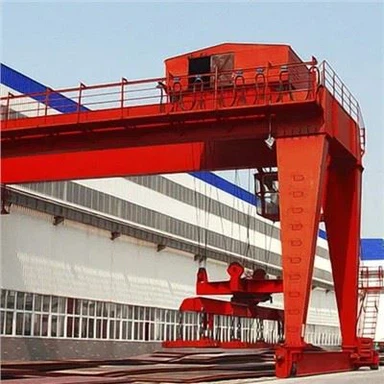
Bridge cranes can be used in various scenarios, from warehouses to processing workshops, from factories to other places, they can be seen. Its working track consists of four parts, namely the bogie, mechanism, lifting mechanism and electrical system. They can effectively support structural components and transport goods to designated locations safely and efficiently. The 4-wheel drive bogie structure enables horizontal and vertical transportation. They can transport materials laterally from above the pipe rack to meet different transportation needs. The lifting mechanism of the bridge crane is composed of many different components, including transmission, generator, limiter, brake, reducer, gear, hook and drum, etc. The electrical system is critical to the proper operation of an overhead crane and consists of several components such as control units, safety guards and circuit boards. These components ensure smooth operation of the machine. Overhead cranes typically consist of hooks, grabs, and electromagnetic cranes, each type offering unique capabilities. In order to ensure the effective operation of the overhead crane, technicians must accurately select appropriate machinery to meet the various needs of industrial production, thereby greatly improving the efficiency and value of the overhead crane.
2. Common mechanical failures of metallurgical bridge cranes
(1) Hook and drum failure
In practical applications, the function and application characteristics of the bridge crane make it that the most prone part to failure is the hook that is in contact with the cargo. Due to long-term sliding, the hook may be worn, deformed, or even have surface fatigue cracks, which will greatly increase the risk of the hook breaking. Therefore, in order to ensure the safe operation of bridge cranes, it is necessary to strengthen the maintenance and upkeep of the hook parts. If there is a problem with the hook, its reliability will be affected. In severe cases, it may even cause heavy objects to fall off. In this case, the heavy object may damage itself, causing financial losses. If the situation is worse, it may injure workers or mechanical equipment below, causing major safety accidents such as casualties and property damage. The drums of bridge cranes are important stress-bearing components. They need to withstand long-term extrusion and friction, leading to wear and fatigue cracks.
If this situation continues to worsen, the drum will be unable to withstand the load, which may eventually lead to rupture or even serious safety accidents.
(2) Wire rope failure
The hook part of the bridge crane is the most prone to failure because they are often in direct contact with various goods. When the hooks are hoisted, they tend to become heavier, and if used for too long, they may deform, which can cause the hook objects to be weak and easy to fall off, thereby increasing the risk. In addition, when using a bridge crane to operate, the gravity of the object will not completely act on the hook, but will be evenly distributed to the hook and wire rope, which will cause serious damage to the goods inside. Therefore, when using a bridge crane, When lifting a crane, special attention should be paid to the stability of the hook to avoid failure. Due to personnel negligence, serious economic losses and possibly even casualties were caused. Although the possibility of breakage is small, the wire rope is still an important safety facility during work. Therefore, the wire rope should be inspected after each work is completed to ensure that it can operate normally and reduce the possibility of breakage.
(3) Reducer failure
The reducer of the bridge crane plays a vital role. It transmits torque to various parts of the crane through gear meshing. Due to mechanical reasons, such as gear breakage, wear, pitting, etc., these failures may cause the reducer to fail to work properly. The reasons for this failure are as follows: ① When the system is running, the increase in temperature and the failure of the lubricating oil can easily cause the failure of the reducer. ② When the gear is subjected to overload pressure, it may cause the gear teeth to deform and generate huge impact force, causing the gear teeth to be fatigued and eventually malfunction. ③If the meshing surface of the gear is contaminated with some impurities, these impurities may increase wear and provide hidden dangers for future failures. ④ Failure may occur due to lack of sufficient lubricant, failure to properly clean, and raised points on the transmission meshing gears.
3. Troubleshooting measures for common mechanical failures of metallurgical bridge cranes
(1) Hook and drum failure prevention
In order to effectively prevent hook failure, first of all, the safe operating regulations of the crane must be strictly observed, and overload lifting is prohibited. Overloaded lifting can cause serious wear, deformation and fatigue cracks on the hook. Therefore, correct operation of the crane is a key step to avoid such failures. Secondly, before daily inspection, maintenance and use, the opening of the hook and the degree of wear of the dangerous section should be carefully checked to ensure that it meets the requirements of relevant standards and that they can operate normally. If cracks are found, they must be scrapped immediately, and repairs such as repair welding are never allowed. During the initial stages of hooks, they will develop cracks or deformations, and there will often be some signs of this before they finally break. If more inspections can be carried out, potential hazards can be discovered earlier, which is very important in preventing failures.
In order to effectively avoid drum failure, two important measures should be taken: first, regularly lubricate the drum and wire rope, which can effectively reduce wear and tear, thereby reducing the risk of drum rupture; second, regularly perform maintenance on the drum Check the status to ensure it is functioning properly. According to relevant regulations, when the drum wall wear exceeds 20% or even cracks appear, measures should be taken immediately to replace it.
(2) Prevention of steel wire failures
To effectively avoid steel wire failures, measures should be taken to ensure their safe use. First of all, the quality control of steel wires should be strengthened to ensure that they have sufficient strength and durability, and advanced alloy materials should be used to support larger goods, so that the probability of failure can be effectively reduced. Secondly, measures should also be taken to ensure the safe transportation of goods. For example, when transporting goods above a certain weight, good quality steel wires should be used, while when transporting smaller goods, other types of steel wires should be used. In order to better resist external impact, measures should be taken, including increasing the number of steel wires and using spiral winding technology to increase the strength of the screws. Finally, when transporting goods, special attention should be paid to the mass and inertia of the goods to ensure their transportation safety. At the same time, the transportation speed should be reduced to reduce the adverse impact on the steel wire to prevent the steel wire from deviating from the original trajectory, thereby reducing transportation risks.
(3) Prevention of reducer failure
In order to ensure the safe operation of bridge cranes, managers should start from the following aspects: ① Pay attention to the maintenance and upkeep of the reducer gear meshing transmission, ensure that it is in good lubrication condition, and reduce the stain on the lubrication surface through regular cleaning operations Impurities to ensure the feasibility and rationality of preventive measures for reducer failure. In order to ensure the normal operation of the equipment, maintenance personnel should determine the lubrication needs based on the actual situation and select the most appropriate lubricant. For example, tooth surface wear and pitting are often caused by abnormal bulges on the tooth surface, so lubrication and cleaning must be done well. ② In order to ensure the safe operation of the bridge crane, the operator should strictly abide by the operating specifications, avoid overloading, and maintain stability when starting and braking. In the absence of special circumstances, the operator should not suddenly reverse the crane to avoid slowing down. unexpected malfunction of the device. ③ Maintenance personnel should keep abreast of the operating status of the bridge crane and formulate regular inspection plans based on work intensity, time and other factors, especially the cleanliness of the lubricating oil. If any problems are found, or the reducer appears during operation If there is an abnormal sound, measures should be taken immediately to deal with it. Maintenance personnel should stop operation immediately, replace damaged parts, and check their working status to prevent a series of problems caused by reducer failure. Work can only continue after the problem has been completely resolved. ④ Make sure the bolts are in the correct position and check whether the gasket needs to be replaced. In addition, pay attention to the size of the vent hole of the reducer to ensure the effectiveness of preventive measures.
In summary, with the popularity of bridge cranes, it can not only bring great convenience to people, but also effectively reduce the burden on workers. Therefore, in practical applications, in order to ensure the normal operation of bridge cranes, and use For the safety of the operator, it must be maintained and maintained regularly to ensure the normal operation of the machine and to detect and solve problems in a timely manner. By improving overhead cranes, workers can be supported and protected more effectively.