


Production Equipment
The company has a variety of advanced mechanical processing equipment. It has a variety of physical, electrical, hydraulic, chemical and other testing and experimental means, and has established a perfect quality assurance system. Introduced and established an international advanced management model, a perfect sales network and a strong technical development force, make every effort to build a first-class crane machinery manufacturing enterprise to meet the needs of different markets and multiple purposes.

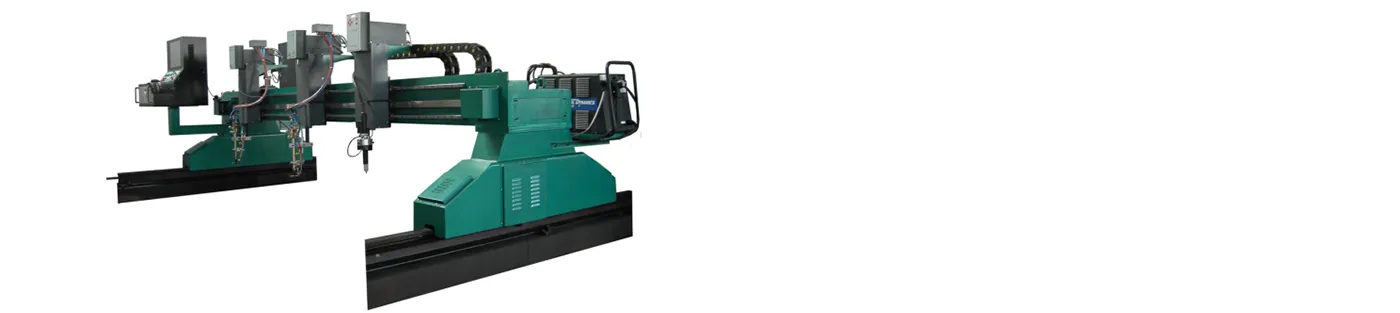
1. Plasma CNC cutting machine:
working principle:
Using compressed air as the working gas and high-temperature and high-speed plasma arc as the heat source, the metal to be cut is partially melted and the melted metal is blown away by high-speed airflow at the same time to form a narrow slit. The cutting accuracy is higher than that of flame cutting, and there is no deformation in underwater cutting.
Plasma is usually described as the fourth state of matter. We generally refer to three states, namely solid state, liquid state and gaseous state; a highly ionized hot gas composed of ions, electrons and neutrons - plasma is formed.
2. Flame CNC cutting machine:
Application principle and characteristics:
Flame cutting is to use oxygen and gas (acetylene, propane, liquefied petroleum gas, etc.) Part of the metal to be cut, the method of cutting.
The flame cutting process is essentially a process in which the cut material is burned in pure oxygen, not a melting process.
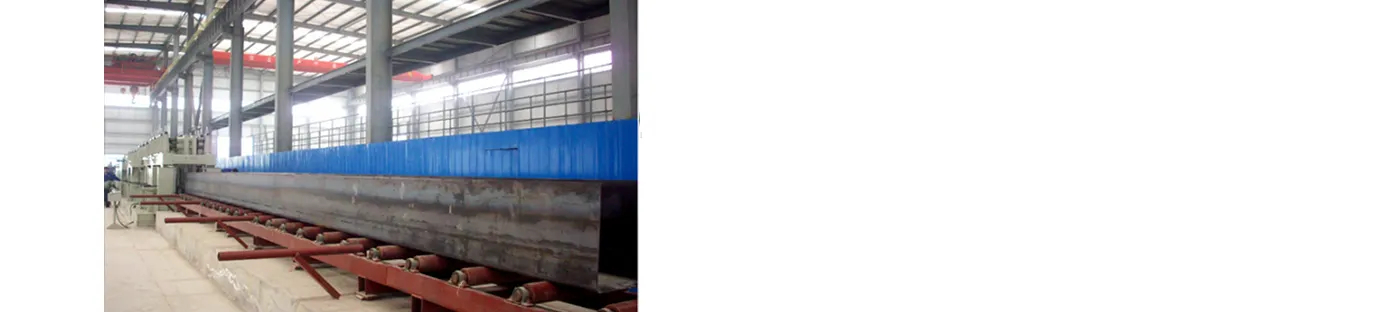
3. Roller production line (U-groove production line):
The equipment used in the high-precision roller production line is independently developed by Crane Group. This technology has been granted a national patent, which is the first case in the country.
After the horizontal steel plate is processed by this production line, it can be formed at one time without welds; it eliminates the need for grinding, cutting, welding and many other tedious production processes in the traditional production process; in the process of processing various formed parts, it can effectively save a lot Welding rods and welding gases reduce labor costs, while significantly improving work efficiency and effectively avoiding air pollution.
This set of production line can be widely used in the production and processing of hoisting machinery, such as U-shaped grooves and other main components. The annual processing of U-shaped grooves alone can reach 140,000 tons, which can be used for supporting processing of various construction machinery and greatly reduces its production cost.
4. Steel pretreatment:
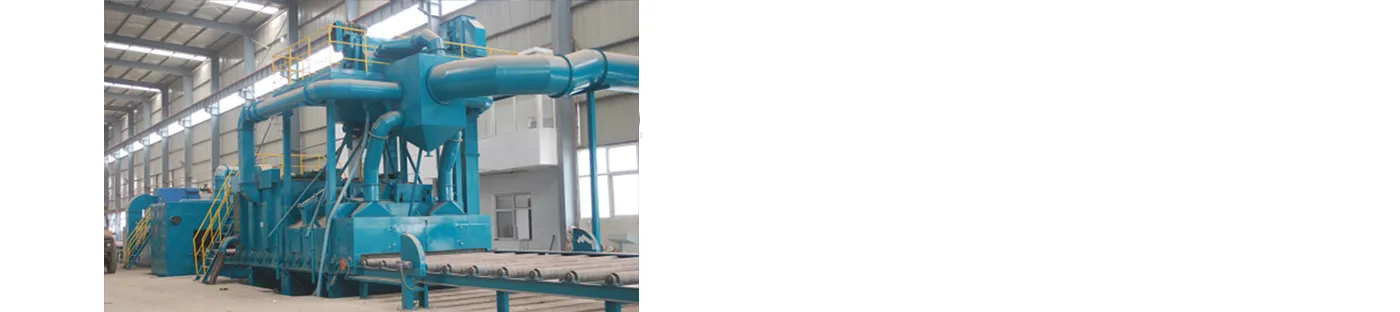
Before processing (that is, the state of raw materials), steel is subjected to surface shot blasting to remove rust and is coated with a protective primer. Pretreatment of steel can improve the corrosion resistance of mechanical products and metal components, improve the fatigue resistance of steel plates, and prolong their service life; at the same time, it can also optimize the production state of steel surfaces, which is conducive to CNC cutting machine blanking and precision blanking.
In addition, since the shape of the steel before processing is relatively regular, it is conducive to mechanical rust removal and automatic painting. Therefore, the use of steel pretreatment can greatly improve the efficiency of cleaning work, reduce the labor intensity of cleaning work and environmental pollution.
Shot blasting is the name of a mechanical surface treatment process similar to sandblasting and shot peening. The principle is to use the motor to drive the impeller body to rotate, and rely on the centrifugal force to throw the balls (cast shot, cut shot, stainless steel shot, etc.) with a diameter of 0.2 to 3.0 to the surface of the workpiece to make the surface of the workpiece reach a certain roughness. To make the workpiece more beautiful, or change the welding tensile stress of the workpiece to compressive stress, so as to improve the service life of the workpiece.
Almost used in most fields of machinery, ship repair, auto parts, aircraft parts, gun tank surfaces, bridges, steel structures, glass, steel plates, pipes, etc.
5. Uncoiling, leveling and shearing production line:
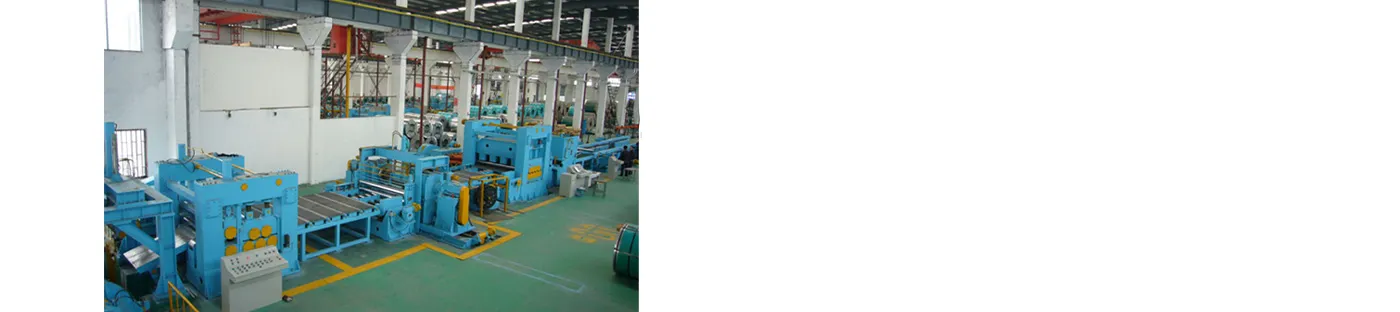
This line is mainly composed of feeding car, uncoiler, intermediate bridge, leveling machine, slitting machine, shearing machine, receiving table, hydraulic and pneumatic system, numerical control system and so on. Equipped with high-precision servo motor, reliable hydraulic system and high-tech programmable control system to ensure accurate feeding and cutting.
6. CNC machining center:
CNC machining center is a kind of CNC machining machine tool with complete functions. It concentrates the functions of milling, boring, drilling, tapping and thread cutting on one device, so that it has multiple technological means.
The machining center is equipped with a tool magazine, which stores different quantities of various tools or inspection tools, which are automatically selected and replaced by the program during the machining process. This is the main difference between it and CNC milling machines and CNC boring machines.
Especially for workpieces that must use tooling and special equipment to ensure product quality and efficiency, machining centers can save tooling and special equipment.
This will save a lot of time and cost for the development and modification of new products, so that the enterprise has strong competitiveness.
Numerical control (English name: Numerical Control, abbreviation: NC) technology refers to the technology that uses digital instructions composed of numbers, characters and symbols to realize the motion control of one or more mechanical equipment. Numerical control generally uses general-purpose or special-purpose computers to realize digital program control, so numerical control is also called computerized numerical control (Computerized Numerical Control), or CNC for short. It is generally called CNC abroad, and the concept of NC is rarely used anymore.
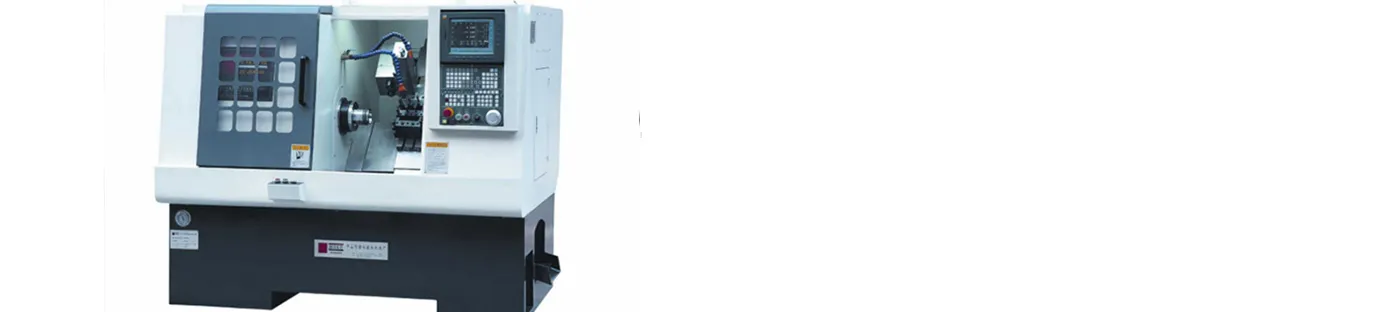
7. CNC lathe:
It is a high-precision, high-efficiency automatic machine tool. Equipped with a multi-station turret or a power turret, the machine tool has a wide range of processing capabilities, and can process complex workpieces such as straight cylinders, oblique cylinders, arcs, and various threads, grooves, and worms.
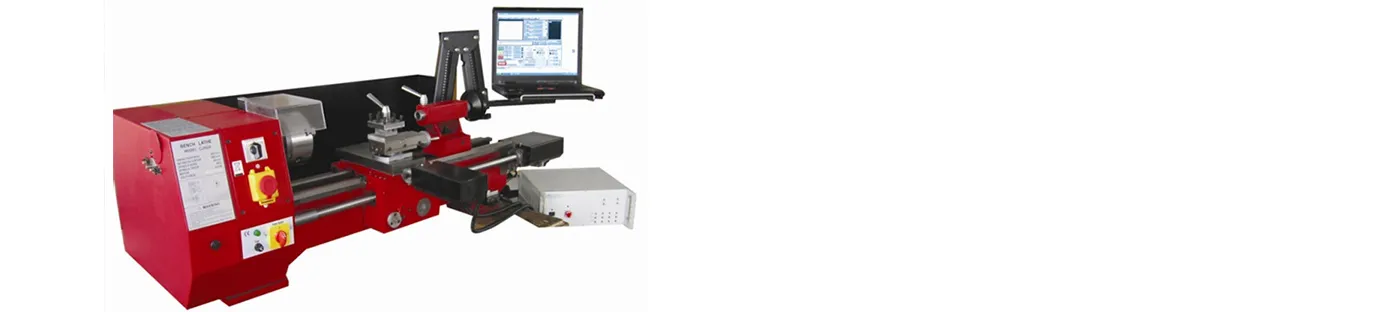
8. Spline shaft milling machine:
It can process splines, gears, stepped gears and splines, taper gears and splines of various standard forms; the spline shaft milling machine has high cutting power and good rigidity, adopts overall protection and automatic chip removal, occupies a small area, and has a good shape Beautiful; the maximum speed is 600r/min, and it is suitable for the installation of special extended tools. The spline shaft milling machine adopts cemented carbide tools under air-cooled conditions, which can perform dry high-speed cutting with excellent processing quality.
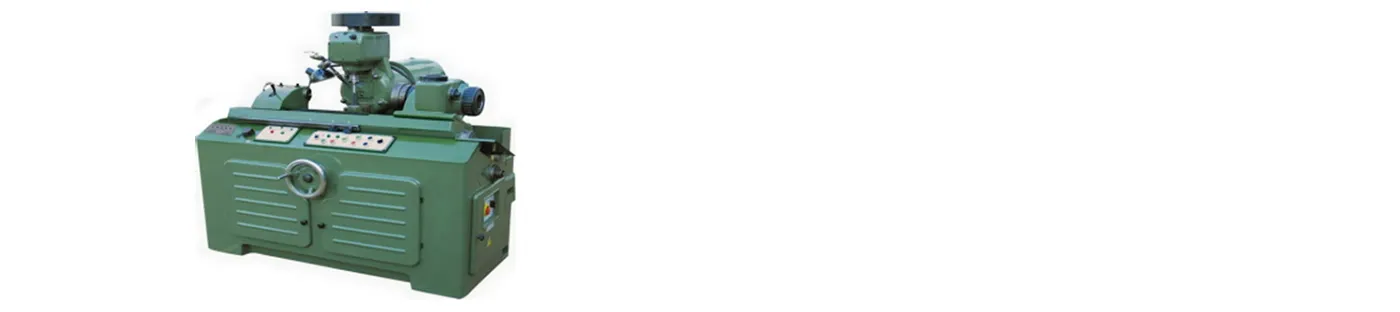
9. Gear hobbing machine:
It is the most widely used machine tool in gear processing machine tools. It can cut straight teeth and helical cylindrical gears on the gear hobbing machine, and can also process worm gears and sprockets. A gear processing machine tool for processing straight, helical and herringbone cylindrical gears and worm gears with a hob according to the generation method.
When this kind of machine tool uses a special hob, it can also process various special tooth-shaped workpieces such as splines and sprockets. The processing accuracy of ordinary gear hobbing machine is 7~6 grades (JB179-83), and that of high precision gear hobbing machine is 4~3 grades. The maximum processing diameter is up to 15 meters.

10. Grinder (grinder, grinding machine):
It is a machine tool that uses abrasive tools to grind the surface of the workpiece. Most grinding machines use high-speed rotating grinding wheels for grinding, and a few use other abrasive tools such as oil stones and abrasive belts and free abrasives for processing, such as honing machines, superfinishing machine tools, abrasive belt grinders, grinding machines and polishing machine etc.
11. Broaching machine:
Metal cutting machine tool used to make holes or keyways. During processing, generally the workpiece does not move, and the broach cuts in a straight line. The main parameter of the broaching machine is the rated tensile force, a machine tool that uses a broach as a tool to process through holes, planes and forming surfaces of workpieces. Broaching can obtain high dimensional accuracy and small surface roughness, high productivity, and is suitable for mass production in batches.

12. Ordinary lathe:
It is a horizontal lathe that can perform multiple processes on various types of workpieces such as shafts, disks, and rings. It is often used to process internal and external rotary surfaces, end surfaces, and various internal and external threads of workpieces. It can also be drilled with corresponding tools and accessories. Holes, reaming, tapping and knurling, etc.
Ordinary lathes are the most widely used type of lathes, accounting for about 65% of the total number of lathes. They are called horizontal lathes because their spindles are placed horizontally.
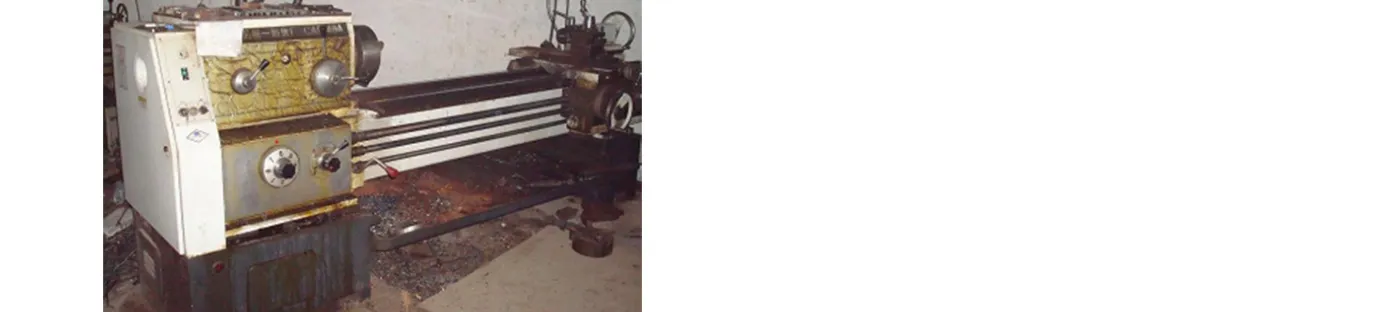
13. High frequency furnace:
It is currently the induction heating equipment with the highest heating efficiency, the fastest speed, low consumption, energy saving and environmental protection for metal materials.
Main working principle: high-frequency high-frequency large current flows to the heating coil (usually made of copper tube) that is wound into a ring or other shape. As a result, a strong magnetic flux with instantaneous polarity changes is generated in the coil. When a heated object such as a metal is placed in the coil, the magnetic flux will penetrate the entire heated object. In the opposite direction of the heating current inside the heated object, a The corresponding large eddy current.
Due to the resistance in the heated object, a lot of Joule heat will be generated, and the temperature of the object itself will rise rapidly. To achieve the purpose of heating all metal materials.
Its use:
① Heat treatment: partial or overall quenching, annealing, tempering, and diathermy of various metals;
② Thermoforming: Whole piece forging, partial forging, hot heading, hot rolling;
③ Welding: brazing of various metal products, welding of various knife blades and saw blades, welding of steel pipes and copper pipes, welding of the same and different metals;
④ Metal smelting: (vacuum) smelting, casting molding and evaporation coating of gold, silver, copper, iron, aluminum and other metals.