


The Difference Between Permanent Magnet And Electromagnet
May 09, 2023
The difference between Permanent Magnet and Electromagnet
Magnetic lifters are versatile workpiece handling devices that can be used to move a wide variety of ferrous metals – from small bundles of bar or scrap to large, heavy blocks. Replacing slings and chains with lifting magnets can increase overall production capacity, allowing one person to 'lift' loads that required two or more people to lift on older tools.
Lifting magnets can increase productivity. For example, assuming a circular shaft filled horizontally in a parts bin, if a sling or chain is used instead of a magnetic lifter, it will definitely be necessary to lift one end of the part by hand so that the sling or sling The chain goes under the part, and it's just to lift a bar. The lifting magnet can be lowered from the crane, attracts to the required part, and lifts the part out effortlessly. Magnets eliminate the need for blocks and slings, further saving time and without damaging metal surfaces.
Types of Lifting Magnets
There are two basic types of lifting magnets: permanent magnets and electromagnets.
Permanent magnets, as the name suggests, use permanent magnetic materials to enhance the magnetic field.
Permanent magnets used on the job site are generally switched on and off using a control handle. They can be used to handle flat materials as well as round parts up to 2,200 lbs. These lifting devices are 'self-contained' and can be moved to different work sites at any time in the machine shop, but a disadvantage of permanent magnets is that the lifting capacity is limited.
The electromagnet is electrically excited and attracts the material to the magnet surface. The electromagnet uses a energized coil wound on the iron core to arrange the particles in the ferrous material in a common direction, thus generating a magnetic field. Electromagnets generally operate on direct current and therefore require a rectifier. Unlike permanent magnets, electromagnets require a constant power source, which may be seen as either a disadvantage or an advantage depending on the purpose of the electromagnet. Power outages can be catastrophic when using electromagnets, although these problems can be addressed with the multi-purpose power supplies and battery backup systems available on the market today. On the other hand, the ability of electromagnets to vary the energized current provides greater flexibility to the user compared to permanent magnets.
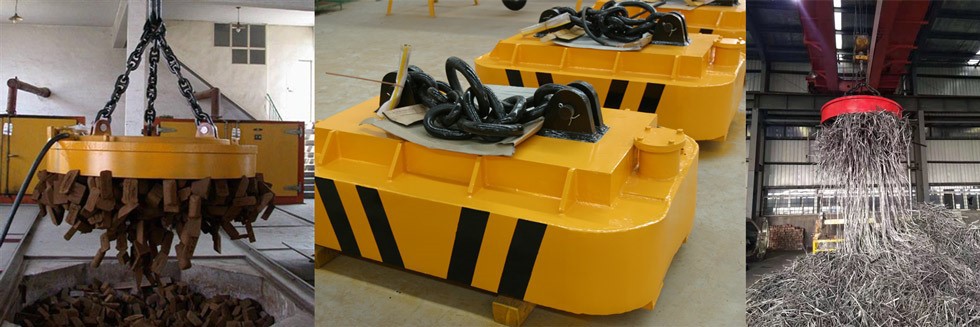
Permanent Magnet vs. Electromagnet
Both permanent magnets and electromagnets can be manufactured to generate different forms of magnetic fields. When choosing a magnetic circuit, the first consideration is the job you need the magnet to do. Permanent magnets are advantageous in situations where electricity is inconvenient, power outages occur frequently, or there is no need to adjust the magnetic force. Electromagnets are beneficial for applications that require changing magnetic force or where remote control is required. Magnets should only be used in the way they were originally intended, and applying the wrong type of magnet to a particular application can be extremely dangerous or even fatal.
Many machining operations are performed on heavy bulk materials and permanent magnets are required for these applications. According to many machine shop users, the greatest advantage of these magnets is that no electrical connection is required.
The permanent magnets feature a 330-10,000-pound lift capacity, and the magnetic circuit can be turned on or off with just one turn of the handle. The magnets are generally fitted with safety locks to ensure that the magnets cannot be accidentally disconnected during lifting. Magnet groups can be used for relatively heavy and long loads that cannot be handled by a single magnet.
Also, many times the parts to be machined are very thin (0.25 inches or finer) and are drawn from a pool of similar parts. Permanent magnets are not suitable for lifting parts from a pile one at a time. Permanent magnets, although extremely reliable when used correctly, cannot alter the magnetic force. In this regard, electromagnets allow the operator to control the strength of the magnetic field through a variable voltage control and to select a piece from a stack of parts. Self-contained solenoids are the most cost-effective magnets per unit of lift capacity, which can be extended to 10,500 lbs.
Battery-powered magnets are useful, they use self-contained gel batteries to increase lift capacity, and can handle flat, round, and component-shaped products. Magnets powered by batteries can repeat the lifting action, providing considerable lifting capacity without external power.
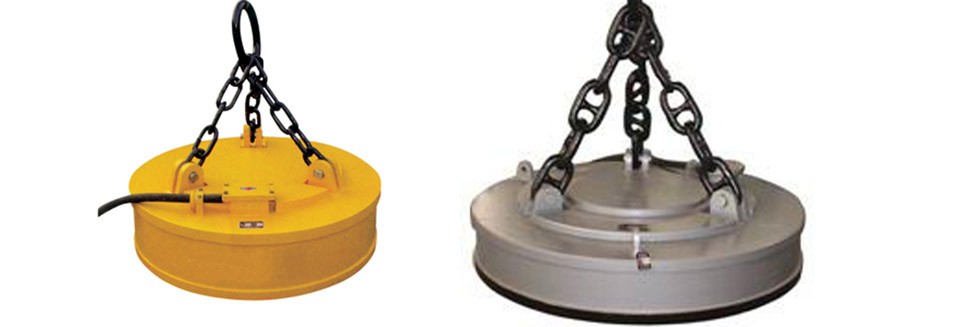
Start with a Magnetic Crane
Lifting magnets, whether electric or permanent, have a rated load on the nameplate. This capacity is related to a certain thickness. If the magnet is used for materials with a thickness smaller than the rated value, the rated load capacity will be reduced. In order to increase the lifting capacity, the lifting magnets can be installed in groups on the lifting beam. When using a magnet stack to lift a load, the magnets should be evenly spaced to share the entire load. Materials tend to sag without support, so magnets must be sized properly to support the load. When the load is lifted and reversed, care must be taken that the load capacity of the magnet drops to about 1/4 of the value specified on the nameplate. Also, the material tends to slip when subjected to shear, so care must be taken in these applications.
In case the magnets operate on DC, a combined AC-DC rectifier and magnet controller must be installed on the crane, which converts the crane power from AC to DC and switches the magnetic circuit on/off.
Remote operated lifting magnets can be controlled from the crane cab, or via a pendant switch or remote transmitter. These systems are used to handle single or multiple sheets, whether in storage areas, truck loading, or cutting table loading and unloading. The electromagnet is also equipped with an additional battery in case of a power outage.
