
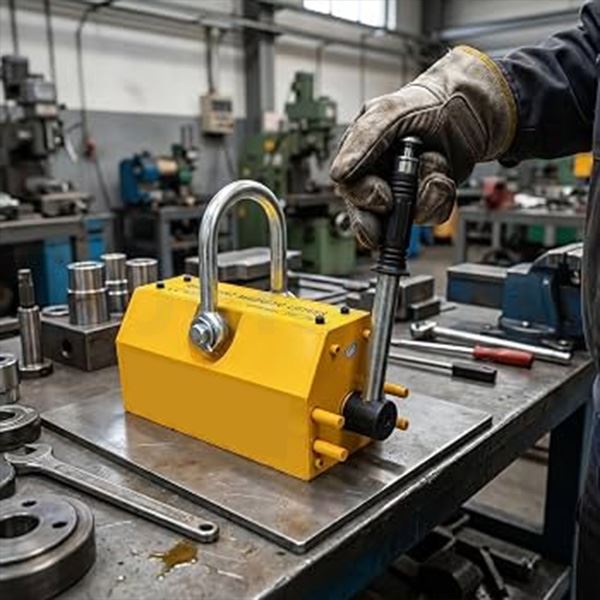
Permanent Magnet
video
Permanent Magnet

Permanent Magnet


Rated Lifting Capacity: 100 kg to 10,000 kg

Operating Temperature: ≤80°C

Dead Weight: A few kilograms to several hundred kilograms

Price: Contact us at any time!

  • Fast Delievery
  • Quality Assurance
  • 24/7 Customer Service
Product Introduction
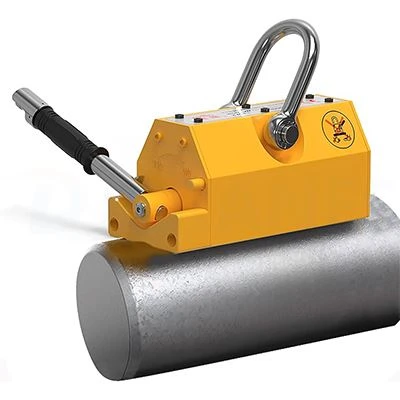
A permanent magnet, commonly referred to in the lifting industry as a permanent magnetic lifter or permanent magnetic chuck, is a lifting device that utilizes high-performance rare-earth permanent magnetic materials to generate a strong holding force for handling ferromagnetic workpieces.
Its primary advantage is the ability to operate without electricity; the magnetic circuit is engaged or disengaged via mechanical control to grip or release the workpiece. Thanks to its simple structure, safety, energy efficiency, lack of power consumption or heat generation, and low failure rate, it has become a standard tool for handling steel plates, profiles, and mechanical components across industries such as shipbuilding, construction machinery, steel manufacturing, and mold making.
Magnetic Lifter
Magnetic Lifter
600kg Permanent Magnetic Lifter

Permanent Magnet Technical Parameters


When purchasing or using the equipment, pay attention to the following core parameters:

a. Rated Lifting Capacity: The maximum weight the equipment can safely lift; common specifications range from 100 kg to 10,000 kg.

b. Breakaway Force: The maximum force required to detach the workpiece from the lifting magnet; a key safety indicator, typically 3–4 times the rated lifting capacity (e.g., 2.8x, 3.5x).

c. Safety Factor: The ratio of breakaway force to rated lifting capacity. For manual permanent magnet lifters, the safety factor typically reaches 3 or even 3.5.

d. Operating Temperature: To ensure stable magnetic force, the ambient temperature and workpiece temperature generally must not exceed 80°C.

e. Suitable Workpieces: Primarily for ferromagnetic materials, such as steel plates, steel sections, and mechanical components.

f. Dead Weight: The weight of the equipment itself; this varies significantly by model and specification, ranging from a few kilograms to several hundred kilograms.


Permanent Magnet Chuck Informations


Structure

The structure of the manual permanent magnet lifter is straightforward, consisting primarily of two main components: the housing and the magnetic shaft.
Housing: Typically assembled from multiple ferromagnetic parts, this forms the main structural body of the device.
Magnetic Shaft: Embedded with permanent magnets, this is the core component that controls the magnetic circuit.
V-Groove: A V-shaped groove is located at the bottom of the device, enabling stable gripping of cylindrical workpieces such as round steel bars and steel pipes.

Features

✅ No electricity required; retains magnetic force during power outages; no risk of dropping due to power loss;
✅ Simple operation; engagement and release can be performed with one hand; no need for slings or binding;
✅ Lightweight with a simple structure; low failure rate; requires virtually no maintenance related to power supply;
✅ V-grooved base accommodates the lifting of both flat steel plates and round steel stock;
✅ Does not damage the workpiece surface.

Applications

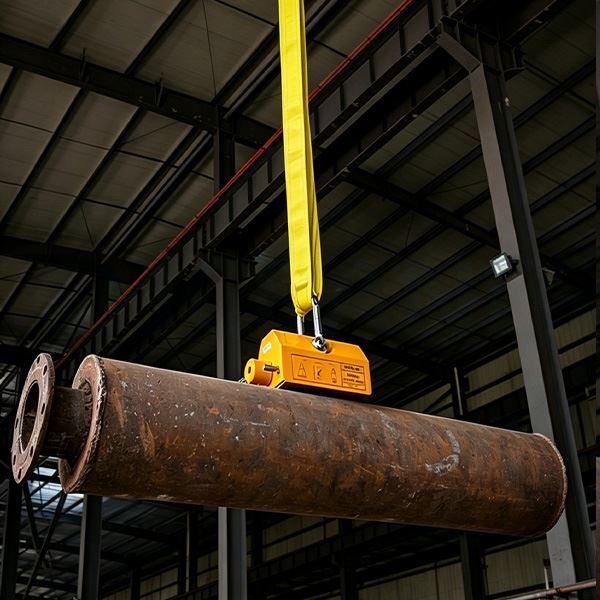
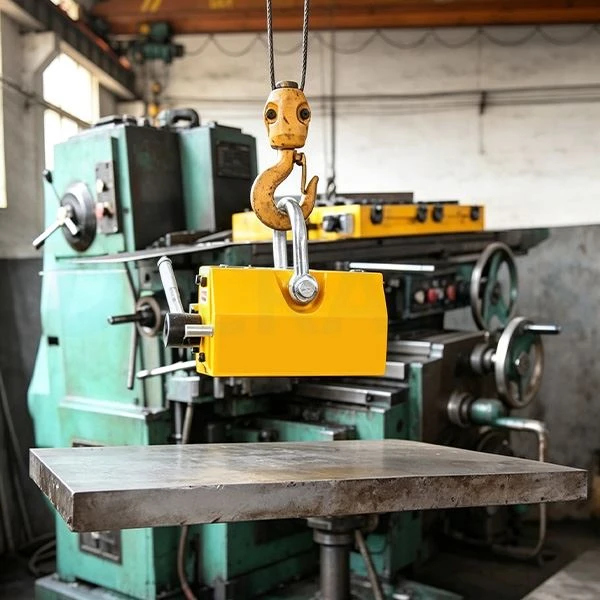
Mold workshops, steel structure plants, machinery factories, and shipyards: used for lifting ferromagnetic workpieces such as thick steel plates, forgings, molds, round steel bars, and steel pipes; compatible with magnetic overhead cranes, gantry cranes, and small hoisting equipment.
Permanent Magnet Lifter For Steel Plants
Permanent Magnet Application

Permanent Magnetic Lifter Usage Precautions


Workpiece Conditions

Suitable only for lifting ordinary carbon steel and low-alloy steel; use with austenitic stainless steel, aluminum, or copper is strictly prohibited.
The workpiece surface should be as flat and clean as possible; rust, mill scale, paint, and oil create air gaps that significantly reduce lifting force.
The workpiece thickness must meet the equipment's specifications; excessively thin sheets may cause the underlying sheet to be lifted along with the target piece, creating a risk of detachment.
Ensure full contact between the workpiece and the base's working surface; partial contact or off-center lifting is prohibited.

Operational Guidelines

Operate strictly within the rated load specified on the nameplate; overloading is strictly prohibited, as are angular pulling, angular lifting, or dragging of the workpiece.
Rotate the handle fully into position, ensuring the safety lock is engaged and the workpiece is securely gripped before lifting; after lowering the workpiece, return the handle to the "OFF" position and verify the workpiece has fully detached before moving the lifter.
Standing beneath the suspended load during lifting operations is strictly prohibited.
The recommended operating ambient temperature is ≤80°C; lifting high-temperature workpieces is prohibited. Do not expose the unit to open flames, drop it, or subject the body to violent impacts.
When using multiple units for a combined lift, a spreader beam must be used to ensure even load distribution; rated capacities cannot simply be added together.

Prohibited Operating Conditions

Do not lift high-temperature workpieces or molten metal.
Do not lift non-magnetic metals, iron filings, or loose scrap material.
Do not use the device continuously under conditions involving severe impact or vibration.
Do not place near strong opposing magnetic fields to avoid demagnetization of the permanent magnets.

Maintenance and Care

Proper maintenance effectively extends the equipment's service life and ensures stable magnetic force:
Cleaning and Rust Prevention: After each use, clean the working surface of the magnetic chuck and apply anti-rust oil to prevent corrosion from affecting precision and holding power.
Avoid Impact: Strictly avoid striking or bumping the working surface of the magnetic chuck to prevent damage to the internal magnetic circuit or a reduction in magnetic force.
Proper Storage: When not in use, set the handle to the "OFF" position and store the equipment in a dry, level location.

Maintenance and Scrapping

Regularly inspect the lifting eye for cracks or deformation, the handle mechanism for smooth operation, and the working surface for dents or impact damage.
Immediately discontinue use if there is surface damage (such as dents), the handle jams, or magnetic force drops significantly.
Store in a cool, dry place; do not leave the device attached to a steel plate for extended periods.
Scrap the unit immediately if demagnetization or internal mechanism damage occurs; do not attempt repairs for continued use.
Permanent Magnet Chuck
Permanent Magnet Production

How To Select A Suitable Permanent Magnet Lifter?

 
To select the appropriate manual permanent magnet lifter, follow these steps:
1. Determine the workpiece weight: This is the primary factor for selection. Calculate the maximum weight of the workpiece to be lifted and choose a model with a corresponding rated lifting capacity.
2. Consider the workpiece shape: Standard models are suitable for steel plates and iron blocks; for cylindrical workpieces such as round bars or steel pipes, models featuring a "V"-shaped groove at the base allow for safer attachment.
3. Assess the operating environment: Ensure the ambient temperature falls within the equipment's permissible range (typically ≤80°C). Additionally, the workpiece surface should be as flat and clean as possible; remove rust scale, oil, and other contaminants that could impair the lifting performance.
4. Combined usage: For long or large-surface-area workpieces, multiple permanent magnet lifters can be used in combination to distribute the load and ensure stability during lifting.
3000kg Magnetic Lifter
Permanent Magnetic Lifter For Sale

Finally Words

 
Besides the permanent magnetic lifter, we also produce and sell other crane spare parts, such as crane control, crane beam, crane spreader, and crane busbar, etc. For any needs, please feel free to contact us!

Hot Tags: permanent magnet, China permanent magnet suppliers, manufacturers, factory

(0/10)

clearall