

Underhung Bridge Crane
Underhung bridge cranes are industrial cranes that provide a versatile and efficient solution for a wide range of lifting requirements. These cranes are typically used in settings where space is limited, such as manufacturing facilities and warehouses, and they provide a...
- Fast Delievery
- Quality Assurance
- 24/7 Customer Service
Product Introduction
Underhung Bridge Crane
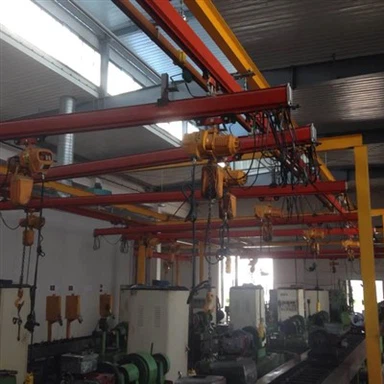
Underhung bridge cranes are industrial cranes that provide a versatile and efficient solution for a wide range of lifting requirements. These cranes are typically used in settings where space is limited, such as manufacturing facilities and warehouses, and they provide a cost-effective solution for transporting and lifting goods and materials.
The bridge crane consists of two main parts: the bridge and the hoist. The bridge spans the width of the facility, and the hoist is attached to the bridge via a trolley. The crane is typically controlled by an operator using either a pendant control or a radio control system.
One of the key benefits of an suspension bridge crane is its ability to minimize the amount of floor space required for operation. The hoist and trolley system are suspended from the bridge, which means that the crane can operate in a much smaller area than traditional floor-mounted cranes. This makes bridge cranes an ideal solution for facilities with limited space or that require multiple cranes to operate in the same area.
Another advantage of suspension bridge cranes is their ease of installation. Unlike floor-mounted cranes, which require significant preparation and construction, It can be easily installed using a pre-existing building structure or an independent support structure. This saves time, money, and disruption to the facility’s operations.
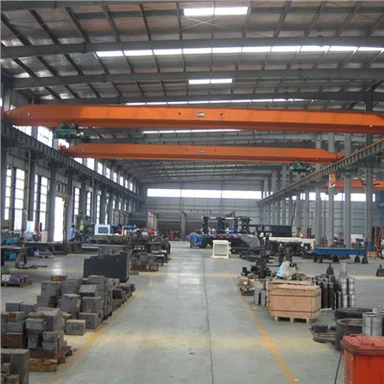
Suspension bridge cranes are available in various configurations, including single girder, double girder, and gantry styles. Single girder underhung cranes are suited for lighter lifting applications, while double girder cranes are designed for heavier loads. Gantry-style underhung cranes are ideal for outdoor or semi-outdoor installations, where the crane must span an area that lacks a building structure.
Suspension bridge cranes can also be customized to meet specific lifting requirements. Customization options include the hoist capacity, span length, trolley speed, and crane control system.
In addition, underhung overhead cranes are designed to operate safely and efficiently. Safety features typically include overload protection, hoist brakes, and emergency stop systems. These features help to ensure that the crane can operate safely, even in demanding environments.
Overall, an underhung bridge crane provides a reliable and efficient solution for lifting and transporting goods and materials in industrial settings. With their compact design, ease of installation, and customization options, it offer a cost-effective solution for a wide range of lifting requirements.

Product Parameters
| Model |
LX0.5-S |
LX1-S |
LX2-S |
LX3-S |
LX5-S |
LX10-S |
||||||
|
Lifting Weight(t) |
0.5 |
1 |
2 |
3 |
5 |
10 |
||||||
|
Span(m) |
Customized |
|||||||||||
|
Working Speed |
20 30 |
20 30 |
20 30 |
20 30 |
20 30 |
20 30 |
||||||
|
Model of Electric Hoist |
CD1 |
MD1 |
CD1 |
MD1 |
CD1 |
MD1 |
CD1 |
MD1 |
CD1 |
MD1 |
CD1 |
MD1 |
|
Hoisting Height(m) |
6 9 12 18 |
6 9 12 18 |
6 9 12 18 |
6 9 12 18 |
6 9 12 18 |
6 9 12 18 |
||||||
|
Lifting Speed(m/min) |
8 |
8/0.8 |
8 |
8/0.8 |
8 |
8/0.8 |
8 |
8/0.8 |
8 |
8/0.8 |
7 |
7/0.7 |
|
Working Class |
A3-A4 |
|||||||||||
|
Electric Current |
Customized |
|||||||||||
Which is better, underhung bridge crane or general bridge crane?
When it comes to choosing between an suspension bridge crane and a general bridge crane, there are several factors that need to be taken into consideration. Both types of cranes have their own set of advantages and disadvantages, and the choice ultimately depends on the specific needs of the user.
Underhung Bridge Crane
An underhung bridge crane is a type of crane that uses an underhung trolley or hoist to move the load along the bridge. The trolley is suspended from the bridge using a set of wheels, and it runs along the bottom flange of the bridge beams.
Underhung cranes are commonly used in applications where the ceiling height is limited or where there is limited overhead clearance.

Advantages of Underhung Bridge Crane
1. Saves space: Underhung cranes have a compact design and require less space for installation. They can be installed close to the ceiling, leaving more floor space available for other equipment or storage.
2. More precise movement: Underhung cranes have a smoother and more precise movement, which makes them ideal for applications that require accurate positioning and movement of the load.
3. Easy to install: The installation process for underhung cranes is quick and easy, and they require minimal structural modifications to the building.
Disadvantages of Underhung Bridge Crane
1. Limited lifting capacity: Underhung cranes have a limited lifting capacity compared to general bridge cranes. This is due to the fact that they are designed to be lightweight and require less structural support.
2. Limited span: Underhung cranes have a limited span, which means they can only move loads within a specific area. This can be a disadvantage in larger facilities where loads need to be transported across a wider area.
General Bridge Crane
General bridge cranes are the most commonly used type of crane in industrial applications. They consist of a bridge that spans the width of the facility and is supported by end trucks that run along rails mounted on either side of the building.
The hoist or trolley is mounted on the bridge, and it moves along the length of the bridge to lift and move loads.

Advantages of General Bridge Crane
1. High lifting capacity: General bridge cranes have a higher lifting capacity than underhung cranes. They are designed to lift heavier loads and can be used in a wider range of applications.
2. Higher span: General bridge cranes have a wider span than underhung cranes, which allows them to move loads across a larger area. This makes them ideal for applications that require the movement of large, heavy loads.
3. Increased durability: General bridge cranes are more durable and can withstand harsh industrial environments. They are designed to last longer and require less maintenance than underhung cranes.
Disadvantages of General Bridge Crane
1. Requires more space: General bridge cranes require more space for installation than underhung cranes. This can be a disadvantage in facilities with limited floor space.
2. Higher installation costs: General bridge cranes are more expensive to install than underhung cranes. They require more structural modifications to the building and may require a higher level of customization to meet specific application requirements.
Conclusion
Ultimately, the choice between an underhung bridge crane and a general bridge crane depends on the specific needs of the user. Underhung cranes are ideal for applications where space is limited, overhead clearance is low and accuracy is important. General bridge cranes are better suited for applications where heavier loads need to be lifted and moved across a wider span. In the end, it is important to weigh the advantages and disadvantages of each type of crane to make an informed decision that will best meet the needs of the user.
Hot Tags: underhung bridge crane, China underhung bridge crane suppliers, manufacturers, factory