

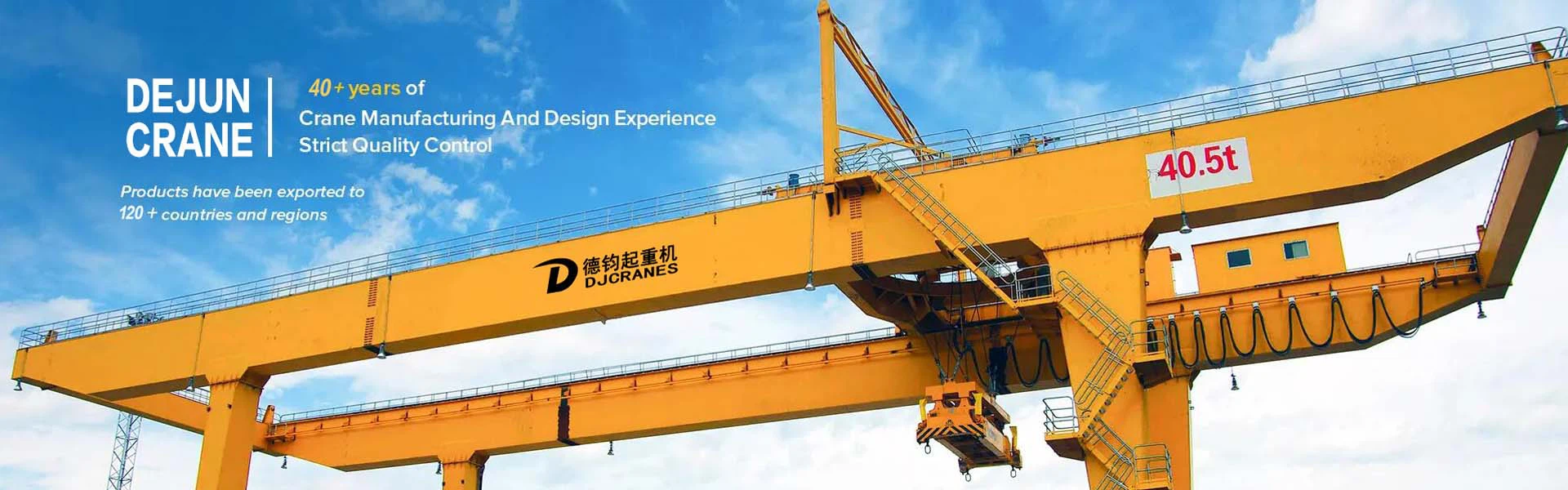

6 Ton Bridge Crane
6 ton Bridge Crane LD-A type 6 ton bridge crane (commonly known as: line crane, aerial crane, single girder crane) is designed and manufactured according to the standard JB/T1306-2008. Rail-running light and small cranes are simple and reasonable in structure, light and flexible, and easy to use...
- Fast Delievery
- Quality Assurance
- 24/7 Customer Service
Product Introduction
6 ton Bridge Crane
LD-A type 6 ton bridge crane (commonly known as: line crane, aerial crane, single girder crane) is designed and manufactured according to the standard JB/T1306-2008. Rail-running light and small cranes are simple and reasonable in structure, light and flexible, and easy to use and maintain.
It is used in metalworking workshops, assembly workshops, maintenance workshops, steel structure workshops and various warehouses. It can also be used for auxiliary lifting in metallurgical and foundry workshops. After considering the requirements of wind and rain protection and improving the design, it can also be used in the open air site.
This series of cranes uses a three-phase 380V, 50Hz power supply. The common lifting capacity is 1-16 tons, the span is 7.5-28.5m, and the working environment temperature is within the range of -25°C to 40°C.

The structural features of the 6 ton bridge crane are as follows:
1. Metal structure part.
The main girder is U-shaped formed by steel plate rolling or welded into channel steel with steel plate, and then welded with I-beam to form a box-shaped solid web beam. For the convenience of storage and transportation, the main beam and the beam are made separately, and then connected with M20 or M24 high-strength bolts to form a whole.
2. Electric hoist.
The electric hoist can lift heavy objects and move longitudinally along the main beam on the lower flange of the I-beam under the main beam. The main varieties are CD1 and MD1.
For CD1 type, the lifting speed is 8m/min (when the lifting capacity is 10 tons, the lifting speed is 8m/min);
The MD1 type is a double-speed hoist with a lifting speed of 8 m/min and 0.8 m/min (when the lifting capacity is 10 tons, the lifting speed is 7 m/min and 0.72 m/min).
Standard lifting heights are 6m, 9m, 12m, 18m, 24m, 30m and so on.
There are two types of hoist running speed along the main beam: 30m/min and 20m/min, generally 20m/min.
3. Operating mechanism.
The running of the cart adopts the form of separate drive, and the braking is completed by the soft-start brake motor. The small tonnage is driven by a drive device, and the large tonnage can be driven by a "three-in-one" reducer.
A travel switch is installed on the end girder on one side of the bridge frame, so that the crane can automatically cut off the power supply and stop before running to the limit position at both ends of the track or before the two cranes meet.
The running electric hoist walks on the lower flange of the I-beam of the main beam, and the limit positions at both ends are limited by the buffers fixed on the web of the I-beam.
Crane Product Application:
This 6 ton bridge crane is a general-purpose crane, which has the characteristics of reasonable structure and strong rigidity of the whole machine. Widely used in machinery manufacturing workshops, metallurgical workshops, petroleum, petrochemical, ports, railways, civil aviation, power stations, papermaking, building materials, electronics and other industries, workshops, warehouses, stockyards and other places with low frequency of use or few times of rated lifting capacity.
Working Characteristics and Potential Safety Hazards of Hoisting Machinery:
1. Hoisting machinery usually has a huge structure and a relatively complicated mechanism. During the operation process, several movements in different directions are often operated at the same time, which is technically difficult.
2. There are many kinds of heavy objects that can be lifted, and the load is changing. Some heavy objects weigh hundreds of tons, are large and irregular, and there are also loose particles, hot melt, flammable and explosive dangerous goods, etc., which make the lifting process complicated and dangerous.
3. It needs to operate in a larger range, and the space for activities is larger. Once an accident occurs, the affected area will be larger.
4. Some hoisting machinery (only referring to construction elevators, etc.) need to directly carry people to do lifting movements, and their reliability directly affects personal safety.
5. There are many exposed moving parts, and they are often in direct contact with operators, potentially many accidental risk factors.
6. The operating environment is complex, such as involving enterprises, ports, construction sites, etc., involving environmental risk factors such as high temperature, high pressure, flammability and explosion, which pose a threat to equipment and operators.
7. The cooperation of many people is often required in the operation, and the requirements for the commander, operator and lifting worker are relatively high.
What inspections need to be done before and after the Installation of the General crane?
1. The items to be inspected before installation of general-purpose cranes are as follows:
① Technical documents should be complete;
② According to the packing list inspection, the type, specification and quantity of materials and accessories should meet the requirements of design and technical documents, and there should be factory certificates and factory test records;
③ There should be no deformation, damage and rust, and the steel wire rope must not have rust, damage, bending, ringing, kink, crack and looseness;
④ The coordinate position, elevation, span length and flatness of the ground surface of common general-purpose crane ground track foundations, crane girders and installation embedded parts shall meet the requirements of design and installation;
⑤ The end face, straightness and distortion of the rails should be inspected before the auxiliary rails are laid, and the rails can be laid only after they are qualified.
2. Handover and acceptance of the general crane after installation:
① What are the requirements for inspection before the operation of the general crane?
a. The installation of electrical system, interlocking device, brake, controller, lighting and signal system shall meet the requirements, be sensitive and accurate.
b. The fixing of the wire rope end and its winding on the hook, pick-up device, pulley block and drum should be correct and reliable.
c. The performance, specification and quantity of the oil and grease added to each lubrication point and reducer shall meet the requirements of the technical documents.
d. Turning the brake wheels of each movement mechanism should make the last shaft (wheel shaft, drum shaft, vertical feeding rod, etc.) in the rotating system rotate one circle without any blockage.
② Which of the following requirements does the no-load test run of a general-purpose crane meet?
a. The operating direction of the operating mechanism should be consistent with the operating direction of each mechanism of the general-purpose crane.
b. Start the motors of each mechanism separately, and their operation should be normal. When the cart and trolley are running, they should not be stuck on the rails; the correct and timely action of each brake and the action of the device should be accurate and reliable.
c. When the hook is lowered to a low position, the number of turns of the wire rope on the drum should not be less than 2 (except for the fixed ring.
d. When the cable is used to conduct electricity, the speed of unwinding and retrieving the cable should be coordinated with the speed of the corresponding mechanism, and should be able to meet the requirements of the work.
e. The rail clamps, brakes, windproof and anti-skid anchoring devices and cart anti-deflection devices of general cranes and loading and unloading bridges should operate accurately and reliably; general crane anti-collision devices, buffers and other devices should be able to work reliably.
f. Except for one or two tests in item e, the rest of the tests should be no less than five times, and the actions should be accurate.
3. The static load test of general-purpose cranes meets the requirements as follows:
① The general-purpose crane should stop at the pillar of the factory building.
② For general-purpose cranes with multiple hoisting mechanisms, the static load test shall be carried out on each hoisting mechanism separately; if required, the static load test of the hoisting mechanism combined lifting shall be carried out; the lifting capacity shall comply with the regulations in the technical documents.
③ The static load test should be carried out according to the following procedures and requirements: first start the hoisting mechanism, carry out no-load lifting operation, and make the trolley run back and forth on the whole stroke. This dry operation should not be less than three times, and there should be no abnormal phenomenon.
| Model |
LX0.5-S |
LX1-S |
LX2-S |
LX3-S |
LX5-S |
LX10-S |
||||||
|
Lifting Weight(t) |
0.5 |
1 |
2 |
3 |
5 |
10 |
||||||
|
Span(m) |
Customized |
|||||||||||
|
Working Speed |
20 30 |
20 30 |
20 30 |
20 30 |
20 30 |
20 30 |
||||||
|
Model of Electric Hoist |
CD1 |
MD1 |
CD1 |
MD1 |
CD1 |
MD1 |
CD1 |
MD1 |
CD1 |
MD1 |
CD1 |
MD1 |
|
Hoisting Height(m) |
6 9 12 18 |
6 9 12 18 |
6 9 12 18 |
6 9 12 18 |
6 9 12 18 |
6 9 12 18 |
||||||
|
Lifting Speed(m/min) |
8 |
8/0.8 |
8 |
8/0.8 |
8 |
8/0.8 |
8 |
8/0.8 |
8 |
8/0.8 |
7 |
7/0.7 |
|
Working Class |
A3-A4 |
|||||||||||
|
Electric Current |
Customized |
|||||||||||
Hot Tags: 6 ton bridge crane, China 6 ton bridge crane suppliers, manufacturers, factory


