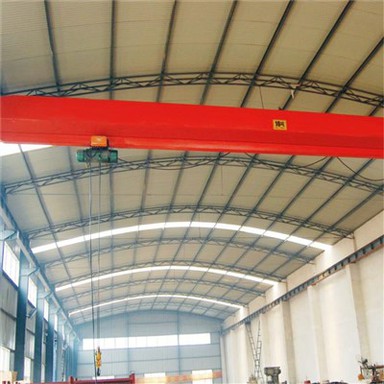


Selection Of Gantry Cranes
Nov 30, 2023
Selection of gantry cranes
Gantry crane is one of the very important lifting equipment in industrial construction. The correct selection of gantry crane can improve work efficiency, ensure safe production and save costs. The following are the principles for selecting gantry cranes:
Choose the appropriate type and specifications according to your usage needs.
The type and specification of the gantry crane should be selected based on factors such as the size, weight, shape and characteristics of the cargo. For example, for places that need to frequently lift small and light items, you can choose a light gantry crane; for places that need to lift heavy items or long pieces, you need to choose a gantry crane with a higher load-bearing capacity.

Consider the limitations and requirements of the operating site.
The restrictions and requirements of the operating site are also important factors in selecting a gantry crane. For example, the size of the operating area, power supply configuration, ground conditions, operator skill level, and cargo handling requirements all need to be considered.
Determine appropriate span and cantilever lengths.
The span and cantilever length are important factors affecting the quality of the gantry crane itself. On the premise of meeting the equipment usage conditions and complying with the span series standards, the span should be reduced as much as possible. The selection of the cantilever length should be determined based on the characteristics of the cargo and operational requirements to ensure that it can meet the use needs.
Determine appropriate wheelbase and track.
The selection of wheelbase and track has a great influence on the stability and load-bearing capacity of the gantry crane. Generally speaking, the wheelbase should meet the stability requirements of the mast along the track, while taking into account the overall dimensions of the cargo. The model and size of the track also need to be selected based on the specifications and operating requirements of the gantry crane.

Consider environmental and conditioning factors.
Environmental and conditional factors also have a great influence on the selection of 10 ton gantry cranes. For example, the climate, terrain and geological conditions of the operating site will affect the selection and configuration of the crane.
Consider economics and sustainability.
When selecting a gantry crane, in addition to the above factors, you also need to consider economy and sustainability. Choosing a gantry crane with higher cost performance can save costs, while choosing a gantry crane with environmental protection and energy saving characteristics can meet the requirements of sustainable development.
These principles and standards are important references for selecting gantry cranes. Based on these principles and standards, a gantry crane suitable for operational needs and economy can be selected to ensure work efficiency and safe production.

It is organized as follows:
① Single and double beams
Generally speaking, if the lifting capacity is below 50t, the span is within 35m, and there are no special usage requirements, the single main beam type should be selected. If you require a large door leg width, a high working speed, or if you often lift heavy or long items, you should choose a double-girder gantry crane.
② span
The span of a gantry crane is an important factor affecting the quality of the crane itself. During selection, the span should be reduced as much as possible on the premise of meeting the equipment usage conditions and complying with the span series standards.
③ Determination of wheelbase
a. Can meet the stability requirements of the mast along the direction of the crane track
b. The overall dimensions of the cargo must be able to pass through the flat steel frame of the outriggers smoothly.
c. Spacing size
During work, a certain space should be left between the external dimensions of the gantry crane and the cargo and transport vehicle passages in the yard to facilitate loading and unloading operations. When loading and unloading general transport vehicles within the span, they should maintain a distance of more than 0.7m from the door legs. When the spreader is not working, there should be a distance of more than 0.5m from the transport vehicle. When the goods pass through the door legs, there should be a distance of more than 0.5m.
④ Electrical equipment
It should comply with the relevant regulations of GB/T14406-1993 for general gantry cranes.