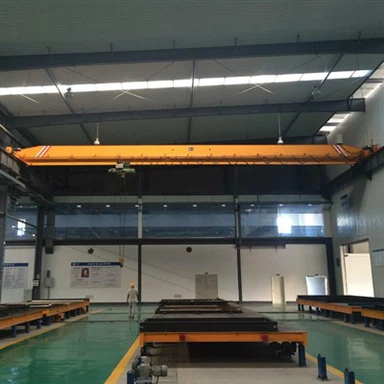


How To Choose And Buy A Bridge Gantry Crane?
Nov 09, 2023
How to choose and buy a bridge gantry crane?
During the years I have been working, many friends have doubts about the parameters of the gantry crane, especially the rated lifting capacity, maximum lifting capacity, total lifting capacity and effective lifting capacity, etc. The explanations of the parameters are now organized as follows:

Lifting machinery performance parameters
The most important performance parameters of the basic working capacity of the lifting machinery are the lifting capacity and working level.
① The lifting capacity refers to the maximum weight of the heavy object allowed to be lifted under specified working conditions, that is, the rated lifting capacity. Generally, the lifting capacity of a overhead gantry crane with an electromagnetic suction cup (see lifting suction cup) or grab bucket should also include the weight of the electromagnetic suction cup or grab bucket. The lifting capacity of jib crane also includes the weight of the hook group.
② The working level is a performance parameter that reflects the overall working conditions of the hoisting machinery and is an important basis for the design and selection of the hoisting machinery. It is determined by the total number of working cycles and load status that the lifting machinery needs to complete during the required period of use.
The International Organization for Standardization (ISO) stipulates that the working level of lifting machinery is divided into eight levels.
For lifting machinery with highly regular and repetitive operating procedures, such as gantry cranes for loading and unloading ship cargo at docks, stacking cranes for elevated warehouses, and hopper lifts for feeding blast furnaces, the working cycle is also an important parameter. The work cycle refers to the time required to complete a work cycle, which depends on the working speed of the mechanism and is related to the transportation distance. The above-mentioned cranes sometimes also use productivity as an important parameter, which is usually expressed in terms of the lifting volume completed per hour.

The main parameters
1. Lifting capacity G
Lifting capacity G refers to the mass of the lifted object, in kilograms (kg) or tons (t). Generally divided into rated lifting capacity, maximum lifting capacity, total lifting capacity, effective lifting capacity, etc.
① The rated lifting capacity Gn (excluding the mass of the lifting wire rope, hook and pulley block) refers to the heavy objects or materials that the crane can lift together with the separable spreaders or attachments (such as grabs, electromagnetic chucks, balance beams, etc. ) the sum of the masses. For gantry cranes with variable amplitudes, their rated lifting capacity changes with the amplitude.
② The maximum lifting capacity Gmax refers to the maximum rated lifting capacity allowed to be lifted by the crane under normal working conditions. For a crane with variable amplitude, at the minimum amplitude, the maximum rated lifting capacity allowed to be lifted by the crane under safe working conditions is also called the nominal rated lifting capacity.
③ The total lifting capacity Gt refers to the heavy objects or materials that the gantry crane can lift, together with the detachable spreaders and the spreaders or attachments fixed to the crane for a long time (including hooks, pulleys, lifting wire ropes and lifting equipment on the boom or The total mass of other lifting objects below the lifting trolley).
④ Effective lifting capacity Gp refers to the net mass of heavy objects or materials that the crane can lift. For example, for a gantry crane with a separable spreader grab, the mass of the material allowed to be grabbed by the grab is the effective lifting capacity, and the sum of the masses of the grab and the material is the rated lifting capacity.

2. Span S The horizontal distance between the support center lines of a bridge-type crane is called the span, and the unit is meters (m)
3. Track gauge is the distance between the center lines of the trolley tracks.
4. Base distance, also called wheelbase, refers to the distance between the supporting center lines of the gantry crane or trolley along the longitudinal direction of movement.
5. Amplitude. When the crane is placed on a horizontal site, the horizontal distance between the vertical center line of the unloaded spreader and the rotation center line is called the amplitude. Amplitudes are divided into maximum amplitude and minimum amplitude.
6. The lifting moment is the product of the amplitude and the corresponding gravity of the lifted object.
7. Lifting overturning moment refers to the product of the gravity of the lifted object and its distance from the overturning line.

8. Wheel pressure refers to the maximum vertical load transmitted by a wheel to the track or ground.
9. Lifting height and lowering depth Lifting height refers to the vertical distance from the horizontal stopping surface or running track of the crane to the allowed position of the spreader, in m.
10. Lifting (descending) speed refers to the vertical displacement speed (m/min) of the rated load under stable motion.
11. The running speed of the trolley refers to the speed (m/min) of the trolley with rated load running on the horizontal track under stable motion.
12. Crane working level Crane working level is the working characteristic that considers the utilization of lifting capacity and time as well as the number of working cycles. It is divided according to the crane utilization level (the total number of working cycles during the entire design life period) and load status.
The load status of the crane is divided into four levels: light, medium, heavy and special according to the nominal load spectrum; the working level of the crane, that is, the working level of the metal structure, is determined by the main lifting mechanism and is divided into levels A1 to A8 (busy work level and full load degree).