


How To Buy A Crane For Lifting Steel Coils
Jan 12, 2023
How to buy a crane for lifting steel coils
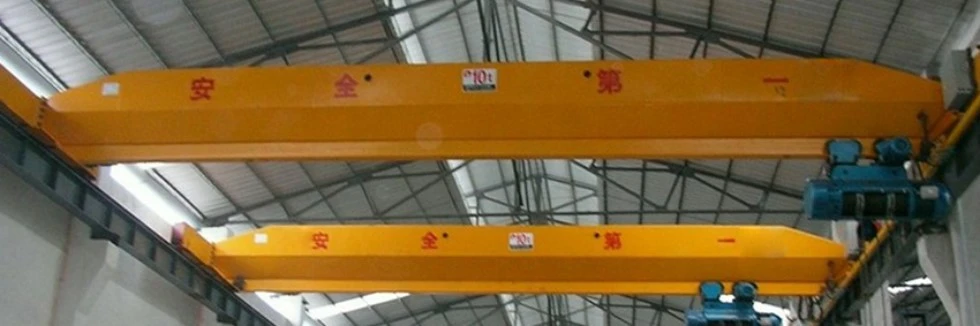
1. Lifting weight
The first thing you have to consider is how much weight you will be lifting and moving.
Whether you're lifting steel coils, equipment, concrete blocks, aerospace components, or something else (here, we're lifting steel coils as an example), you need a single-girder overhead crane that can handle the weight of the load.
The thing to remember about single girder overhead cranes is that they are designed for light to medium loads.
They are limited in terms of lifting capacity (lifting weight and lifting height).
Most single girder overhead traveling cranes are rated for lifting and moving loads between 1 and 20 tonnes.
Therefore, if your load is heavier than this, you must consider using a double girder overhead crane for safety reasons.
2. Span
Probably the reason you are buying a single girder overhead crane is because it is one of the most cost-effective solutions.
It uses less steel than a double girder overhead crane and is lighter than a double girder crane. Relatively speaking, its transportation cost and installation cost are lower.
But please pay attention to the fact that the span of the single girder bridge crane is limited.
Most models on the market are limited to 60 ft spans as most rolled sections can be up to 60 ft in length.
If your span is greater than 60', you will need a stronger crane such as a double girder overhead crane.
3. Classification
All overhead cranes are classified according to load and duty cycle.
The classification determines the strength of the load and the number of cycles the crane completes in a given period of time.
For example: A3, A4, A5, A6, A7, A8, A9
4. Top and bottom runs
A top-running single-girder overhead traveling crane runs on top of each runway girder.
Bottom-running single-girder overhead traveling cranes (commonly known as underslung cranes) operate on the underside of each runway girder.
The main advantage of both is that top-running single-girder cranes have a higher load-bearing capacity than bottom-running single-girder cranes.
In operation, on the other hand, single-girder cranes maximize their footprint when mounted on ceiling trusses or roof structures (without the need for runway support columns).
5. Customization
One of the disadvantages of single girder overhead cranes is that they are more difficult to customize to service walkways, platforms, heavy equipment or heavy components under the hook.
Customizing your crane can be difficult or expensive, or both.
So if you need to add unique components to your crane, check with the manufacturer to make sure they can be added easily and affordably.
The last thing you have to consider is the company behind the crane.
Does your chosen company only manufacture cranes, or do they also offer a full range of other services?
Your best bet is to choose a crane designed and built by the manufacturer.
