


Do You Understand The Construction Process Of a 15 Ton Bridge Crane In 2022?
Dec 22, 2022
Do You Understand The Construction Process Of a 15 Ton Bridge Crane In 2022?
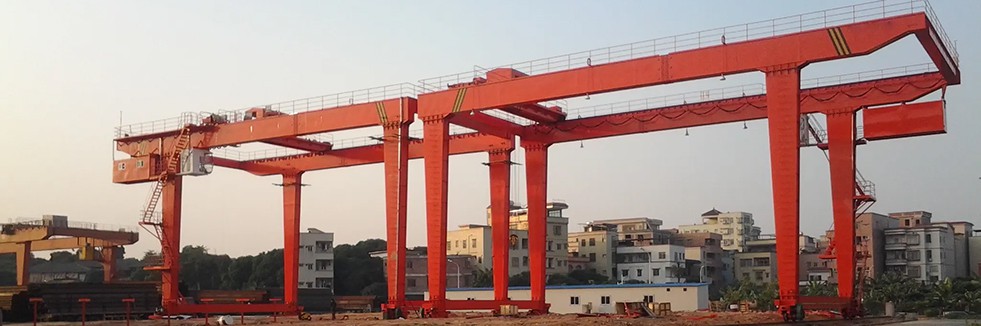
Whether it is a bridge crane or a gantry crane, they are collectively referred to as hoisting machinery, and its mechanism parts, metal components, connectors and accessories are all made of metal and non-metal materials.
1. Cranes (referring to bridge cranes, gantry cranes and cantilevers, etc.) parts are generally made of forgings, rolling parts, welding parts, castings as accessories, and are machined.
Forgings, rolled parts and welded parts are mainly made of carbon structural steel, high-quality carbon structural steel and low alloy structural steel.
Alloy structural steel is used for important parts, and special alloy steel is used for parts with special requirements.
Castings can be cast steel, cast iron and cast copper.
In order to improve the mechanical properties of materials, increase the overload capacity and service life of parts, castings must be heat treated.
Non-ferrous metals and their alloys are used for parts with special performance requirements such as high electrical conductivity, wear resistance, corrosion resistance or high strength.
2. The metal structure of hoisting machinery is mainly made of steel.
Ordinary carbon steel Q235 is the most commonly used material for manufacturing metal structures of hoisting machinery. According to the chemical composition and deoxidation method, Q235 is divided into four grades: A, B, C, and D.
The important overloaded components of metal components of hoisting machinery are stipulated to adopt Q235B, Q235C, Q235D. For general metal structural components of hoisting machinery, when the design temperature is not lower than - 25°C, it is allowed to use boiling steel Q235F, and the working level is A7 and A8 The metal components of cranes should adopt open hearth furnace killed steel Q235C or special killed steel Q235D.
When it is necessary to reduce the self-weight of the structure, 16Mn or 15MnTi can be used. For the hoisting machinery whose outdoor work is greatly affected by temperature, such as gantry cranes, the selection of its metal components must be cautious.
Carbon components should be selected according to GB700, and low alloy steel should be selected according to GB1591.

3. Connection of metal structure: The metal structure of the crane is assembled from basic parts into components, and then assembled from components into a complete machine, all of which need to be realized through connection.
Connection is an indispensable process in the assembly process of hoisting machinery. There are two ways of welding and bolting.
However, no more than two connection methods shall be used at the same joint.
(1) Welding: Welding is a connection method widely used at present.
The welding process is relatively simple, but its disadvantage is that the connection rigidity is relatively large, which is easy to cause residual stress and deformation of the structure, and the weld seam is highly sensitive to low temperature.
The type of welding rod or welding wire should be compatible with the strength of the main body metal. For structural welds with high working level and bearing dynamic load, it is necessary to ensure that the welding rod or welding wire has sufficient toughness and plasticity.
When using different welding methods (manual arc welding, submerged arc welding and gas shielded welding), the appropriate electrode type must be selected.
When welding carbon steel and low alloy steel, C02 gas shielded welding can be used. When welding stainless steel and non-ferrous metals, Ar arc welding or He arc welding should be used.
(2) Bolt connection: The advantages of bolt connection are that the connection has good toughness and plasticity, convenient quality inspection, and uniform force transmission.
For structures with frequent changes and dynamic loads, and structures working at low temperatures, the connection reliability is good. Its disadvantage is that it is easy to loosen under the action of dynamic load.
The ability of rough bolts to transmit shear force is small. Refined bolts require high precision and are inconvenient to install. High-strength bolts do not transmit force by themselves, but by the friction generated between connections by high bolt preload.
Because this kind of bolt overcomes many shortcomings of bolts and retains its advantages, and its static strength and fatigue strength are higher than that of riveting of the same size, it is widely used.
However, during the installation process, the preload must be guaranteed and must be tightened with a torque wrench.
Whether it is a 20-ton crane or a 500-ton crane, the above basic construction requirements will be followed unless there are special requirements.
Our suggestion: Before building the crane, in order to ensure the normal use of the crane and the safety of the staff, please be sure to explain the working environment of the crane and your special requirements to our company.


