

Fault Prevention Of Hoisting Mechanism Of Bridge Crane
Feb 15, 2023
Fault Prevention of Hoisting Mechanism of Bridge Crane
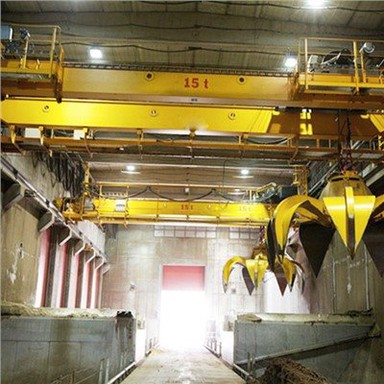
The 50 ton bridge crane is a kind of crane that runs along the track on the erected bridge, also known as the crane.
The 50 ton bridge crane moves in the x-axis and y-axis in the factory space through the bridge frame and the track on the cart, and moves in the z-axis through the hoist to drive the hook. The working range can cover the whole working area.
It has the advantages of large carrying capacity, high working reliability and relatively simple manufacturing process.
A 50 ton bridge crane is generally divided into four components: a trolley, a bridge running mechanism, and a bridge.
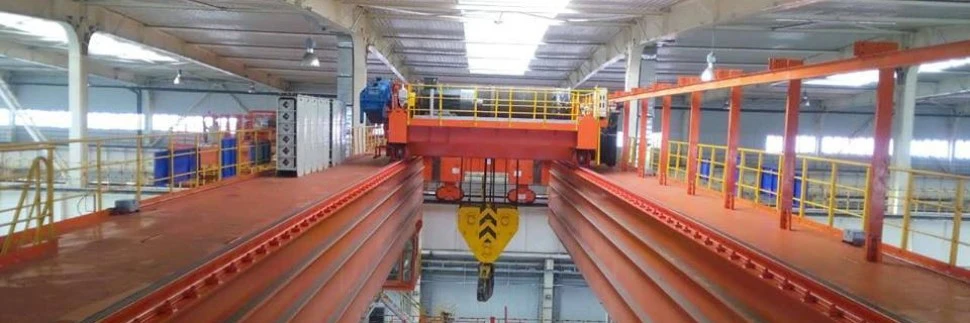
The lifting trolley is composed of three parts: the lifting mechanism, the trolley running mechanism and the trolley frame.
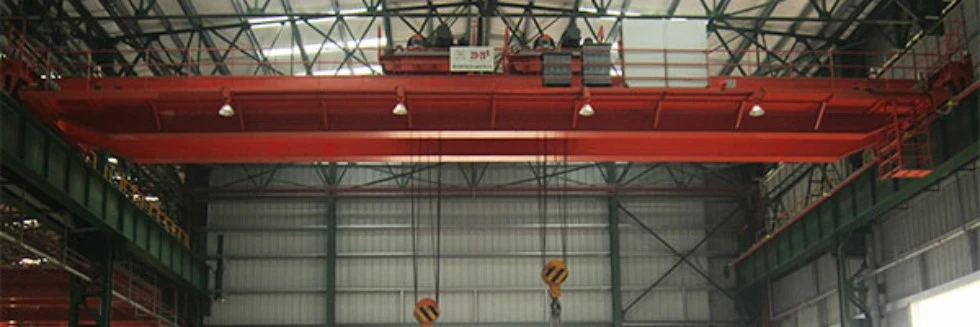
The 50 ton bridge hook crane is equipped with a lifting mechanism on the upper part of the trolley frame. The lifting mechanism of the bridge crane is composed of a motor, a brake, a reducer, a drum and a pulley block.
The reel is driven by the motor through the reducer, so that the wire rope rolls on the reel, so as to realize the function of pulling up and down. The trolley frame is the frame of the lifting mechanism.
When there is a single hook, it is a set of independent driving devices; when there are two main and auxiliary hooks, there are two sets of independent driving devices as the lifting mechanism.
In order to ensure safe and reliable work, a braking device is installed on the high-speed shaft of the reducer, and a lifting height limit position is installed on the bearing seat at one end of the reel.
Fault phenomena and causes of lifting mechanism
Due to the reasons of the lifting motor or other electrical appliances, the output torque of the motor is unbalanced, which causes a large impact force during the meshing process of the gear pair of the reducer.
The pinion nut of the gear pinion is loose, resulting in damage to the internal components of the reducer, such as gear meshing misalignment or bearing damage. The coaxiality of the motor shaft and the reducer coupling shaft is out of tolerance, the coupling pin is damaged, etc., resulting in poor gear meshing or Excessive resistance and noise.
In these cases, the long working hours of the crane will inevitably lead to failure. Sometimes the fixing bolts are loose or the rain cover fixing bolts are loose.
Precaution
In order to prevent the occurrence of failures, the driver should check the idling of the lifting mechanism before each shift.
Pay attention to whether the sound of the reducer is normal, and remove the oil drain bolt of the box to check the gear oil quality and impurity content.
If there is any abnormality, it must be shut down for inspection until the abnormality is eliminated.
If the lifting mechanism is found to be noisy during operation, stop the machine immediately and check whether the bolts of each component are loose, whether the connecting shaft of the motor and the reducer is coaxial, whether it is damaged, whether the braking mechanism is normal, and take corresponding measures according to the damage.