


Common Faults Of Offshore Crane Wire Rope
Jul 02, 2023
Common Faults of Offshore Crane Wire Rope
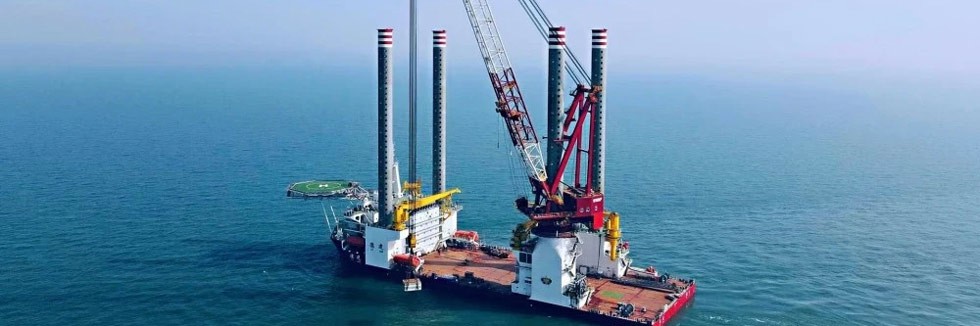
During the development and production of offshore oil and gas fields, the crane is responsible for all hoisting operations on the offshore site, as well as all material hoisting operations with supporting ships.
The wire rope is the key component for the crane to realize the movements such as luffing, lifting and lowering. The frequency of daily use of the offshore platform crane is relatively high. Compared with other hydraulic and electrical system failures, once the wire rope fails, it will not only lead to serious equipment damage. , but also lead to a large loss of production.
The crane is used in a sea environment with high salinity and high humidity. The designed working environment temperature is - 20°C ~ +45°C, and the allowable working wind speed is 20.8m/s; the maximum allowable wind speed when parked is 51.5m/s. The average daily operation time of the crane is about 7~9 hours.
The steel wire rope of the crane is installed and fixed through the pulley block, the pressure plate, the wedge and the winch, and the steel structure to realize the lifting and lowering of the luffing, main hook, and auxiliary hook systems.
Cause Analysis and Treatment of Common Faults
As a key component of the crane, the wire rope must not only pay attention to daily maintenance, but also establish an information management ledger, including the wire rope model, installation time, use time, inspection status, maintenance information, etc.
Now we analyze several common wire rope failures in the daily operation of cranes, and put forward suggestions for handling them.

Wire rope "twisted"
① Fault phenomenon: The wire rope passing through the traveling pulley block realizes the lifting and lowering operation of the main hook.
Under normal working conditions, the steel wire ropes on both sides of the swimming pulley block should be parallel to each other without interfering with each other; but when the steel wire ropes are "twisted", a "figure 8" or "twist shape" will appear between the steel wire ropes on both sides of the swimming pulley block. cross, as shown.
When the main hook lowering stroke is longer, the kink phenomenon will be more obvious. The "twisting" of the wire rope will not only increase the wear and tear, but also increase the safety risk of hoisting operations.
② Analysis of the cause: The reason for this phenomenon is that after the newly installed or newly replaced steel wire rope has been used for a period of time, internal stress concentration occurs, resulting in the "twist" of the steel wire rope.
③ Treatment method: When newly installing or replacing steel wire ropes, attention should be paid to selecting steel wire ropes with good kink resistance and the twist direction of the strands matching the winch drum; use the correct rope threading process to ensure that torsional stress is avoided during rope threading .
During the operation, when the wire rope is kinked, the hoisting task should be suspended, the boom should be placed on the safety frame, the main hook, hook and pulley block should be lowered to the deck surface, and then the wire rope should be loosened gradually. , by removing the wedge-shaped head end ("dead rope" end) connected to the boom, releasing the internal stress of the wire rope, reinstalling and fixing the wedge-shaped head. Before working again, do a lifting test to confirm that the "twist" problem of the wire rope is resolved.
At the same time, in order to ensure that the "twist" problem of the wire rope is essentially solved, the winding direction of the wire rope on the drum is also very important. Please contact us to know how to wind.

Wire rope "broken rope"
① Fault phenomenon: Not long after the crane was put into use, for about 2 months, the boom was luffed and lifted between 40° and 60°, that is, the second and third floors on the luffing winch drum At the rope transition, irregular wire rope arrangement will occur, which will cause multiple "rope collapse" phenomena of the steel wire rope. When the load of the crane is heavier, the phenomenon of "rope collapse" will be more obvious, accompanied by sound and vibration.
If the crane continues to operate in this state, it will quickly increase the wear of the wire rope, and there will be safety hazards in hoisting operations. The comparison between the normal working state of the wire rope on the winch and the winding state of the staggered "broken rope" state is shown in the figure.
② Cause Analysis
a: The reel does not match the newly installed wire rope, resulting in a gap smaller than the diameter of the wire rope (one round of the reel) left on the reel after the first layer of wire rope is fully discharged, which will lead to irregular rope arrangement;
b: After the smooth reel has been in operation for a period of time, the first layer of steel wire rope will deform due to long-term compression, which will cause the guide lines of the steel wire rope to fail
c: The deflection angle between the reel rope and the fixed pulley at the top of the A-frame is too large;
d: The direction of the rope outlet fixed by the pressure plate on the reel is not smooth, which will lead to irregular rope arrangement on the second layer, or "rope collapse" in the last 1 to 2 turns of the second layer of rope arrangement.
③ Treatment method: The deflection angle of all wire rope winding systems should not be greater than 4°, and the anti-rotating wire rope should not be greater than 2°. The length of the drum can be reduced or the diameter of the drum can be increased, and the distance between the fixed pulley and the drum can be increased. The distance and other measures to reduce the deflection angle.
When the steel wire rope is wound in multiple layers on the winch drum, the deflection angle of the steel wire rope at the flange of the drum should be greater than 0.5° to avoid the accumulation of the steel wire rope.

Wire Rope Fatigue
① Fault phenomenon: There are abnormal phenomena such as broken wires, broken strands, corrosion, deformation, and wear on the surface of the wire rope. The fault can be found through daily inspection.
Among them, in normal use, the more typical phenomenon is the broken wire of the wire rope, and the fault form is shown in the figure.
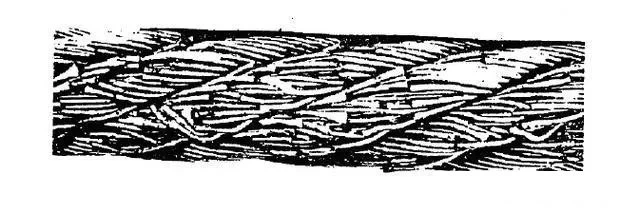
② Reason analysis: During normal use, the steel wire rope is subjected to external forces (friction, impact, extrusion, etc.), and the loss of the steel wire rope will occur.
③ Solution: During the daily operation of the 20 ton crane, strengthen the state monitoring of the wire rope, and do a good job of maintenance and recording.
Once any abnormality is found, refer to the "GB/T 5972-2006 Practical Specifications for Inspection and Scrapping of Steel Wire Ropes for Cranes" to judge the use status of the steel wire ropes. Once the relevant scrapping standards are met, immediately replace the steel wire ropes that meet the scrapping standards.
During the use of the crane, the wire rope is one of the key components that determine the safety of the on-site lifting operation.
Therefore, it is generally recommended to adopt preventive maintenance for steel wire ropes. At the same time, for vulnerable types of steel wire ropes, spare parts management should be done in advance, which can greatly improve the reliability and safety of equipment use.