


Why Choose A Big Manufacturer When Buying A Crane —— Welding
Jan 31, 2023
Why Choose A Big Manufacturer When Buying A Crane —— Welding
The welding process is one of the important processes in the crane manufacturing process. The load-bearing structure of the 100 ton overhead crane is to weld the metal structure together to achieve load-bearing.
Its quality directly affects the safety, precision and life of the crane, and it has attracted more and more attention from users. Controlling welding quality and preventing welding defects have become the key to crane quality requirements.
The main welding defects are mainly divided into:
1. Structural defects:
Structural discontinuity, notch effect, stress and deformation caused by poor weld layout, misalignment
2. Workmanship defects:
Undercut, weld flash, lack of fusion, lack of penetration, burn through, underfill, pits and slag inclusions
Arc scratches, excess height, inappropriate welding leg size
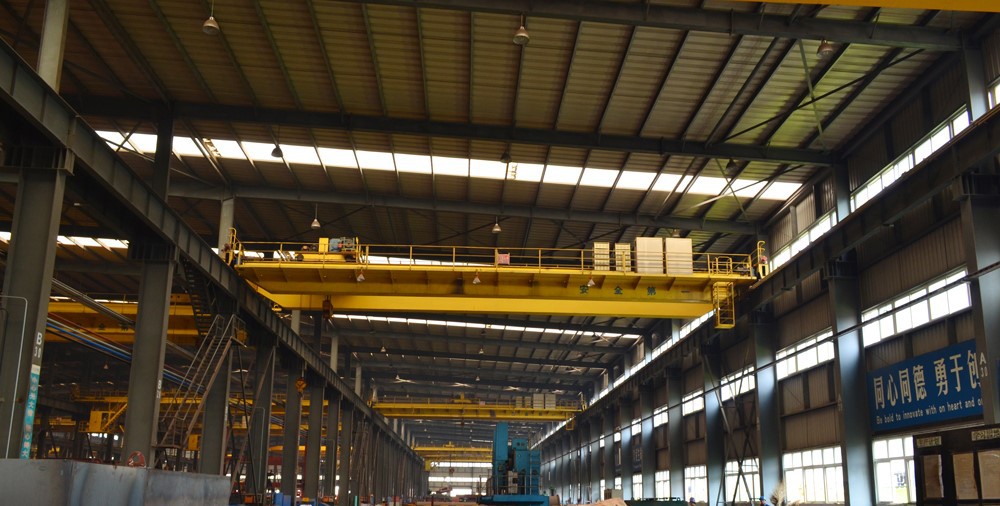
(1) Incomplete penetration refers to the part left by the incomplete penetration of the joint root during welding. Incomplete penetration not only affects the quality of 100 ton bridge crane installation, but also affects the life of the crane, and more seriously, it will cause vicious safety accidents.
Incomplete fusion is a common defect, which refers to the unfused part between the weld metal and the base metal or the welding layers of the weld metal, that is, between the welded metal and the base metal or between the adjacent weld bead or the weld layer local residual gap. During welding, the part between the base metal and the base metal that is not completely melted is also called unfused.
① Hazard
Reducing the cross-sectional area of the weld significantly reduces the mechanical properties of the joint and causes greater harm to stress concentration.
The failure of the welded structure due to the cracks extending from the incomplete penetration and the overall cracking of the weld, especially under dynamic load, has a greater impact on the high temperature fatigue strength.
② Cause
Improper manual transport is the main factor.
In addition, when the welding current is low, no matter how the welding speed is controlled, incomplete penetration will occur.
③ Preventive measures
A: It can be prevented by taking measures such as appropriate current, welding speed and correct groove form.
B: For operating welders, low technical level is an important factor for incomplete penetration, that is, the correct current will also cause incomplete penetration due to personal technical level within the normal range of welding speed (under the condition of certain welding current, welding The speed still has a range, only by mastering the correct welding technology and controlling the optimal welding speed can a fully penetrated weld be achieved. When multi-layer welding, it is necessary to swing to make the weld and the base metal penetrate, and to make the layers fully fused In order to avoid the occurrence of incomplete penetration.
④ Inspection method
A: Weld seam bending section inspection. When there is lack of penetration, it can be clearly exposed and can show its true size.
B: Low-magnification analysis of the cross-section of the welded joint. After the cross-section of the welded joint is worn and then polished, the shape of the incomplete penetration defect can be checked.
C: is to more clearly describe the relationship between the position of incomplete penetration and the weld, welding affected area and groove form, etc., and can be analyzed for coarse grain structure after etching.

(2) Slag inclusion refers to the slag remaining in the weld metal, that is, some non-metallic inclusions in the molten pool during the welding metallurgy process have no time to float out during the crystallization process and remain inside the weld.
Flux cored wire and submerged arc welding are prone to slag inclusions. The generation of slag inclusions is related to the welding method, welding materials (welding wire, flux) and the composition purity of the base metal to be welded.
Slag inclusions are mainly divided into root slag inclusions, welding layer and grain boundary slag inclusions, and seam welding slag inclusions.
① Hazard
It not only reduces the mechanical properties, but also increases the tendency to generate thermal cracks and induce lamellar tearing of thick plates.
② Cause
A: Welding current is too small, liquid metal and slag cannot be separated.
B: The welding speed is too fast, and the slag has no time to float out.
C: Multi-layer welding does not clean the edge of the workpiece and the weld seam.
D: The angle of the strip is incorrect.
③ Preventive measures
Welding materials (welding wire purity, flux) should be selected correctly, the content of sulfur and phosphorus in the base metal should be controlled, and appropriate welding parameters should be selected in the process, so that the existence time of the molten pool should not be too short.
When multi-layer welding, please pay attention to remove the previous welding slag, and transport the strip correctly to facilitate the slag to float out.
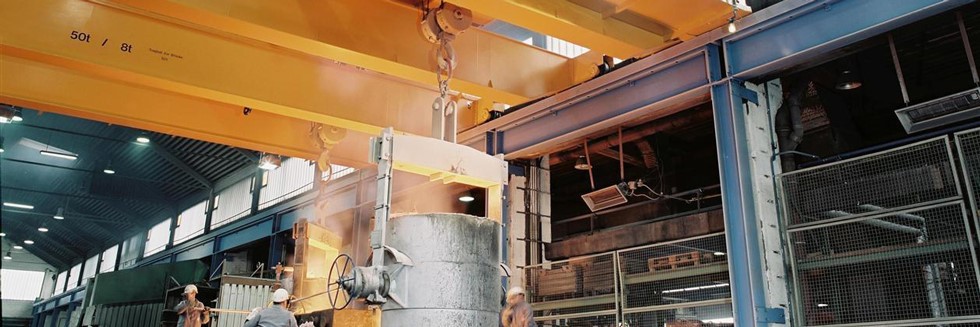
3. Metallurgical defects:
Cracks, porosity and inclusions
Performance deteriorates.
Welding cracks are welding defects that are mainly controlled in the crane manufacturing process. The existence of welding cracks affects the life of the product and determines the safety of the crane.
Welding cracks refer to the gaps formed by the new interface formed by the destruction of the bonding force of metal atoms in local areas of the welded joint under the joint action of welding stress and other brittle factors.
It has sharp gaps and large aspect ratio characteristics, and is the most serious process defect of welded structural parts, which directly affects product quality, reduces product life, and even causes vicious accidents.
① Classification of cracks
A: thermal cracks, including crystallization cracks, liquefaction cracks, high temperature low plasticity cracks, high temperature cavity cracks and reheat cracks.
B: cold cracks, including delayed cracks, thermal stress cracks and lamellar tearing.
② Cause
The mechanism of crack generation is very complicated, and the generation mechanism of different crack forms is also different. The main reasons for cracks due to improper operation are as follows:
A: The depth and width of the weld are too large (that is, the arc voltage is small and the current is large).
B: The weld bead is too small (especially the fillet weld and the root pass (mainly because the walking speed is too fast and the wire feeding is too slow).
C: The arc crater cools quickly at the end of the weld.
③ Preventive measures
For the above reasons, the following adjustments can be made:
A: Increase the arc voltage or reduce the welding current to widen the weld bead and reduce the penetration.
B: Slow down the walking speed and increase the wire feeding speed to increase the cross-section of the weld bead.
C: Fills the crater properly.