


How To Check The Quality Of Purchased Cranes?
Jun 11, 2023
How to check the quality of purchased cranes?
When purchasing hoisting machinery, it is first necessary to comprehensively consider factors such as the scope of use, frequency of work, utilization rate, rated lifting capacity, etc. of the hoisting manufacturing company, and choose a crane that is suitable for the work level required by the unit.
Carry out market research according to the proposed technical parameters. The selected supplier must be a professional crane manufacturer with a special equipment safety license. And inspect the matching of the manufacturer's processing equipment, the standardization of production, and the advanced nature of the products. After comparison, choose the lifting machinery with reasonable price, good quality, excellent performance, and complete safety devices. the
After the equipment arrives, check whether the accompanying technical documents are complete, whether the accompanying accessories, tools, and accessories are consistent with the list, and whether the equipment and accessories are damaged or defective when unpacking and accepting, and make a record of unpacking and accepting.
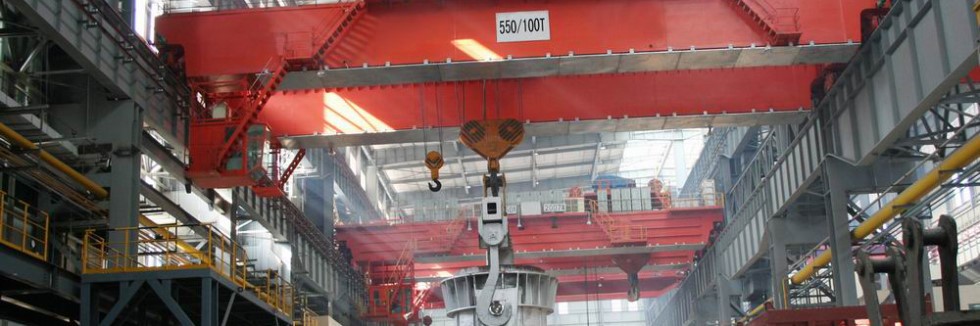
The five common crane parts inspection contents are as follows:
|
Check Item |
Check Content |
Judgement Standard |
|
|
Spreader |
hook |
Check whether there are cracks, deformation and wear on the hook; whether there is any abnormal sound on the rotating hook, the bearing and the threaded part; whether there is any abnormal deformation on the hook mouth; the lubrication of the bearing |
No cracks, obvious deformation and wear; smooth rotation, no abnormal sound; no abnormal deformation; good lubrication, proper amount of oil |
|
Gourd board, connector |
Check the fastening of the gourd board and connecting parts, and it is required that there is no looseness; the pin, shaft and side plate are not deformed, and the wire rope anti-loosening device is functioning normally. No cracks and deformation; no wear and deformation of the hook set |
Reliable and safe fastening, no looseness; no deformation; normal function and invisible, cracks; no wear, deformation |
|
|
Grab |
All structures and parts are free from deformation and cracks; rotating parts operate flexibly; the mouth of the bucket is tightly closed without obvious wear and tear |
No deformation, cracks; flexible rotation; no serious leakage and normal wear of loose materials |
|
|
Wire Rope |
wire rope structure etc. |
Check whether the structure and diameter of the wire rope are consistent with the design; when the spreader is at the lower limit position, check the number of safety turns on the drum |
Exactly consistent with the manual; more than 2 safety circles are required |
|
Wire Rope State |
Check the wire rope for broken wires, broken strands, exposed cores, kinks, corrosion, bending, looseness, and wear; when using wire ropes in high-temperature environments, check whether the structure is correct; whether the tail end is processed and fixed correctly; whether there is job-hopping phenomenon; whether there is adhesion Dust, sand, impurities, moisture |
There shall be no more than 10% of broken wires in one lay length, the rope diameter shall not be less than 93% of the nominal size, and there shall be no obvious defects; the structure shall be suitable for the purpose; there shall be no defects, and it shall be firmly fixed; no job-hopping; no sticking of sand, dust and impurities , moisture |
|
|
Wire rope installation and use |
Check whether the steel wire rope rubs against the structural parts; the contact condition with each pulley |
No rubbing; no obvious wear, bias, or looseness |
|
|
Pulley Block |
pulley |
Check whether there are cracks, defects, and wear; whether there is any abnormality in the rope groove; whether there is any trace of wire rope de-grooving; |
No cracks, obvious deformation and wear; no abnormal wear; no groove marks; no looseness |
|
Shaft and bearing rope block, balance pulley, etc. |
Check whether there are cracks and wear; lubrication; turn the pulley, whether there is sound and eccentricity of the rotating mass; check for grooving, falling off, deformation, cracks |
No cracks, obvious wear; no abnormal sound and mass eccentricity; no groove, shedding, deformation, cracks |
|
|
Reel Assembly |
reel |
Check whether there are cracks, deformation and wear; whether there is any abnormality in the fixed part of the wire rope; |
No cracks, no obvious deformation and wear, correct and normal; no traces of grooves; no looseness and shedding |
|
Shafts and Bearings |
Check for cracks, deformation and wear; whether the shaft end baffle is deformed and loose; rotate the reel, check whether the bearing has abnormal noise, heat and vibration; lubrication |
No cracks, obvious deformation and wear; no deformation and looseness; no abnormal vibration, sound, heat; good lubrication |
|
|
Brake |
mechanical brake(Settings for some imported models) |
Check whether the oil quantity is appropriate and whether there is oil leakage; whether the frame has cracks and cracks; whether the pawl and ratchet meshing state is abnormal, damaged or worn; whether the gear is damaged, cracked and worn; whether the rack installation is loose or falling off; Is the oil clean |
Appropriate amount of oil, no oil leakage; no cracks and cracks; reliable meshing when descending, no cracks, damage and obvious wear; no wear and tear of the gears, normal meshing; no loosening or falling off of the frame; no obvious pollution of the oil |

