

Crane Operating Mechanism And Driving Method
Jan 09, 2024
Crane operating mechanism and driving method
Crane, also known as crane. It is a commonly used lifting equipment. This article will mainly describe the operating mechanism and driving method of the crane.
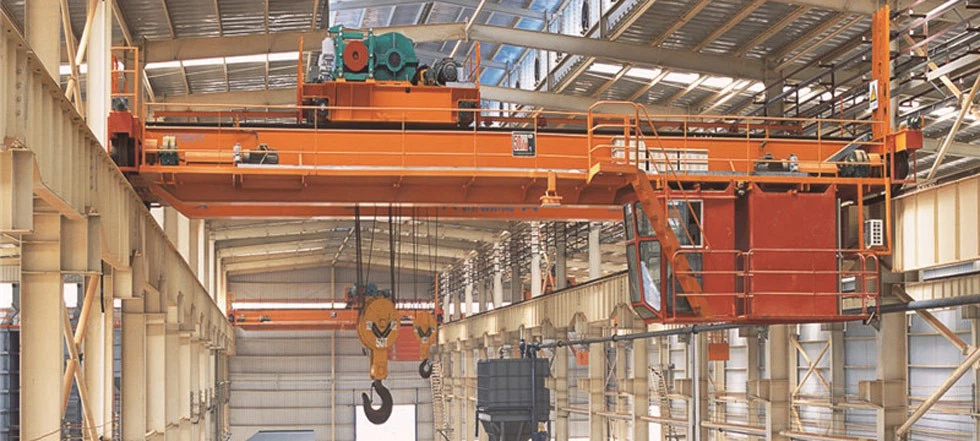
The operating mechanism of the crane generally uses only four driving and driven wheels. If the lifting capacity is large, adding wheels is often used to reduce the wheel pressure. When there are more than four wheels, an articulated balancing frame device must be used to distribute the load of the crane evenly on each wheel.
The metal structure of the bridge consists of main beams and end beams, and is divided into two categories: single main beam bridge and double beam bridge. A single-girder bridge consists of a single main girder and end beams located on both sides of the span, while a double-girder bridge consists of two main beams and end beams.
The main beam and the end beam are rigidly connected, and wheels are installed at both ends of the end beam to support the bridge running on the elevated structure. Tracks are welded to the main beam for the lifting trolley to operate. There are many structural types of bridge main beams, the typical ones include box structure, four-truss structure and hollow truss structure.
The box-shaped structure can be divided into several types: on-track box-shaped double beams, off-track box-shaped double beams, off-track box-shaped single main beams, etc. The track box-shaped double beam is a widely used basic form. The main beam is composed of upper and lower flange plates and vertical webs on both sides. The trolley rails are arranged on the center line of the upper flange plate. Its structure is simple. It is easy to manufacture and suitable for mass production, but it is heavy.
The cross-sections of the off-track box-shaped double beams and the off-track box-shaped single main beams are composed of upper and lower flange plates and main and auxiliary webs of unequal thickness. The trolley rails are arranged above the main webs, and the short stiffeners in the box are The plate can be omitted. Among them, the off-rail box-shaped single main beam is replaced by one wide-flange box-shaped main beam. The dead weight is smaller, but the manufacturing is more complicated. The four-truss structure is composed of four plane trusses combined into a closed space structure. The surface of the upper horizontal truss is usually paved with a walking platform. It has light weight and high stiffness. However, compared with other structures, it has large dimensions, complicated manufacturing, and fatigue. Lower intensity, less produced.
The open-web truss structure is similar to the deflected box-shaped main beam. It is composed of four steel plates to form a closed structure. Except for the main web, which is a solid-web I-shaped beam, the remaining three steel plates are cut into many windows according to the design requirements to form a sloping bar-free structure. The open-web truss has walking platforms on the surface of the upper and lower horizontal trusses, and the crane operating mechanism and electrical equipment are installed inside the bridge. It has a light weight and high overall stiffness. This is a type that is widely used in China.
Ordinary bridge cranes are mainly driven by electricity, and are usually operated in the cab, and some are also controlled remotely. The lifting capacity can reach 500 tons and the span can reach 60 meters.

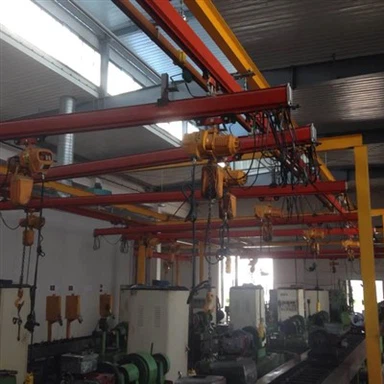
A simple beam bridge crane is also called a beam crane. Its structural composition is similar to that of an ordinary bridge crane, but its lifting capacity, span and working speed are smaller. The main beam of the bridge is a simple cross-section beam composed of I-beam or other section steel and plate steel. A hand chain hoist or electric hoist is equipped with a simple trolley as a lifting trolley. The trolley generally runs on the lower flange of the I-beam. The bridge can run along the track on the elevated structure or on the track suspended below the elevated structure. This type of crane is called a suspended beam crane.

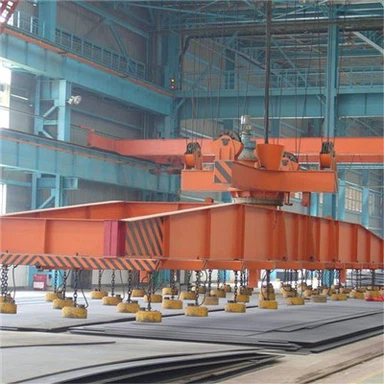
Metallurgical bridge cranes can participate in specific process operations in the steel production process. Their basic structures are similar to ordinary bridge cranes, but they are also equipped with special working mechanisms or devices on the lifting trolley. The working characteristics of this kind of crane are frequent use, harsh conditions, and high-level work. There are five main types.
Simple beam bridge crane type casting crane: used for lifting molten iron into mixing furnaces, steel-making furnaces and lifting molten steel into continuous ingot casting equipment or steel ingot molds. The main trolley lifts the bucket, and the auxiliary trolley performs auxiliary tasks such as flipping the bucket.

Clamp crane: Use clamps to lift high-temperature steel ingots vertically into the deep pit soaking furnace, or take it out and put it on the ingot transport truck.
Ingot removal crane: used to force the steel ingots out of the steel ingot mold. There is a special ingot stripping device on the trolley, and the method of stripping the ingot mold depends on the shape of the ingot mold: some stripping cranes use a neck rod to press the ingot, and use tongs to lift the ingot mold; some use tongs to hold down the ingot mold and use Use small pliers to lift the steel ingot.
Charging crane: used to add charge into the open hearth. The lower end of the main trolley's column is equipped with a pick rod to lift the material box and send it into the furnace. The main column can rotate around the vertical axis, and the pick rod can swing up and down and rotate. The auxiliary trolley is used for auxiliary operations such as furnace repair.
Forging crane: used in conjunction with a hydraulic press to forge large workpieces. A special turner is hung on the hook of the main trolley to support and turn over the workpiece; the auxiliary trolley is used to lift the workpiece.
2. Crane driving method
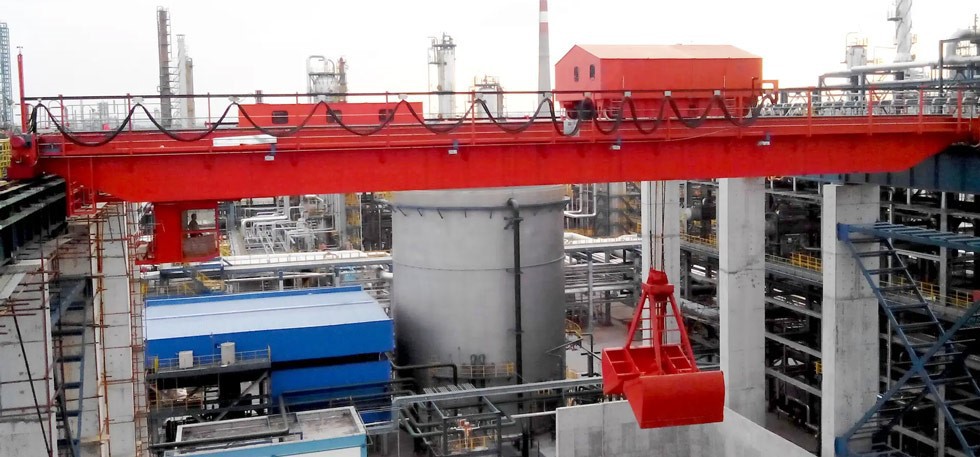
It can be divided into two categories: one is centralized drive, that is, one motor is used to drive the long transmission shaft to drive the driving wheels on both sides; the other is separate drive, that is, the driving wheels on both sides are driven by one motor each. Medium and small bridge cranes mostly use a "three-in-one" driving method that combines brakes, reducers and motors. Ordinary bridge cranes with large lifting capacity often use universal couplings as driving devices for ease of installation and adjustment. .